

Li Feifei's AI Startup Takes Virtual Worlds Mainstream with Marble Beta
World Labs Unveils Marble3D: Text-to-Virtual World Tool Goes Public
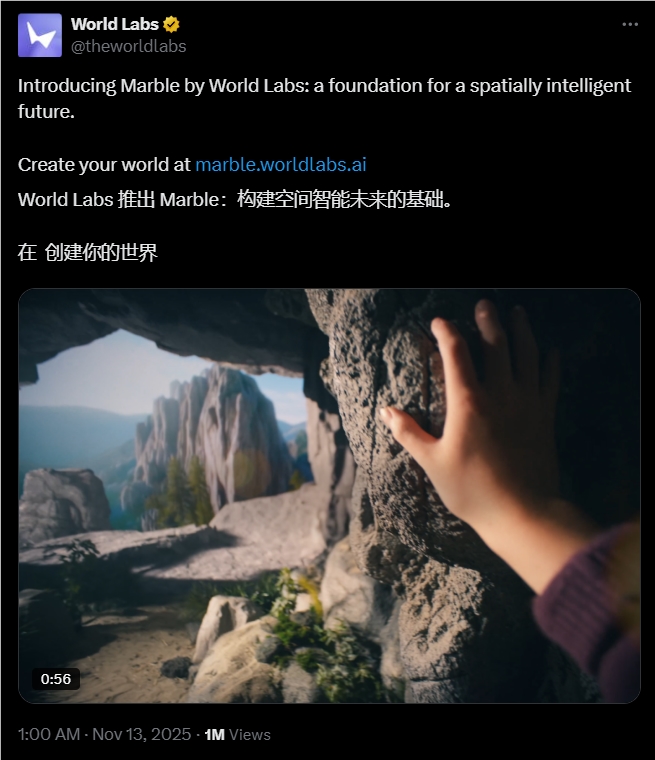
Imagine typing "sunset over medieval castle" and stepping into that world minutes later. That's the promise of Marble3D, the new public beta from Fei-Fei Li's World Labs that's turning heads in tech circles.
From Concept to Creation
The platform marks a significant leap from research project to practical tool for creators. Unlike previous AI systems limited to 2D images or text, Marble generates complete navigable environments where users can move around freely using mouse controls - all from simple prompts or uploaded media.
"We're not just generating static scenes," explains a World Labs spokesperson. "These are persistent worlds with physical consistency that developers can build upon."
How It Works
The magic happens through three key features:
- Multimodal Inputs: Feed it text descriptions ("futuristic Tokyo at night"), single images you want expanded into full environments, or even video clips
- Real-Time Editing: An experimental tool called Chisel lets users sketch rough layouts before applying visual styles - think HTML structure meets CSS design flexibility
- Export Flexibility: Finished worlds convert seamlessly into formats like Gaussian splats for efficient rendering or triangle meshes for modeling software
The generation process typically takes about ten minutes per scene - lightning fast compared to traditional 3D modeling workflows.
Industry Implications
The launch positions World Labs squarely against Google DeepMind's Genie project and startups like Decart in the emerging "world model" space. But experts see unique potential here beyond creative applications.
"This could transform robot training," notes VR developer Alicia Chen. "Instead of painstakingly building test environments, engineers could generate limitless variations instantly."
The film industry stands to benefit too. Production teams might use Marble for rapid scene prototyping before committing resources to physical sets or expensive CGI.
Interestingly, the technology may also impact video generation itself. By exporting sequences from detailed 3D worlds rather than generating flat videos frame-by-frame (like OpenAI's Sora), Marble offers superior spatial consistency crucial for certain applications.
What Comes Next?
The free beta includes basic generation capabilities while paid plans ($20/month and up) unlock commercial rights and higher quotas. Early adopters praise its intuitive interface but note some limitations in fine detail control.
As one beta tester put it: "It won't replace Maya artists tomorrow, but suddenly creating explorable worlds feels as easy as writing an email."
The team hints at future updates enabling human-AI collaboration within these virtual spaces - suggesting we've only seen the first act in this particular tech revolution.
Key Points:
- Public beta launches after successful limited testing phase
- Generates navigable 3D worlds from text/images/video in ~10 minutes
- Supports real-time editing and multiple export formats
- Potential applications span gaming, film, robotics training
- Competes with Google DeepMind's Genie in emerging "world model" field


