Google's Screenless Fitbit Air Aims to Simplify Fitness Tracking

Google Bets on Simplicity with Screenless Fitbit Air

In a market saturated with smartwatches that try to do everything, Google is taking a different approach. The tech giant is preparing to launch the Fitbit Air, a screenless fitness band that strips away distractions while keeping essential health tracking features.

Designed for Focused Fitness

The Air represents a radical departure from traditional smartwatch design. Without a display, it relies on subtle vibrations and smartphone notifications to communicate with users. "We wanted to create something that helps people stay present during workouts," explains a Google product manager familiar with the project. "Constant screen checking can actually disrupt your flow."

Available in three eye-catching colors - obsidian black, lavender purple, and berry red - the device offers multiple band options for different lifestyles. From sweat-resistant silicone for gym sessions to sleek metal mesh for office wear, the accessories make it versatile enough for any occasion.

Powerful Tracking Without the Screen

Don't let the minimalist design fool you. The Fitbit Air packs serious health monitoring capabilities:

  • 24/7 heart rate tracking
  • Detailed sleep analysis (including REM cycles)
  • Step counting and calorie burn estimation
  • Activity recognition for various workout types

The lack of screen doesn't mean less data - it just means you'll view your stats when you choose to, rather than being constantly notified.

Your AI Health Coach

The real game-changer might be the integrated Google Health Coach, an AI assistant that learns your habits and offers personalized advice. Using large language model technology, it can:

  • Suggest meal plans based on your activity levels
  • Adjust workout recommendations as you progress
  • Provide motivation when you're struggling to stay on track "It's like having a personal trainer in your pocket," says one beta tester. "But one that actually remembers everything about your routine."

Who's It For?

At $99, the Fitbit Air positions itself as a premium alternative to devices like Whoop, but with Google's ecosystem advantage. It's perfect for:

  • Fitness enthusiasts who want data without distraction
  • Professionals seeking a discreet wearable
  • Anyone overwhelmed by smartwatch complexity

The device launches May 16, 2026 - just in time for summer fitness goals.

Key Points:

  • Screenless design reduces digital distraction during workouts
  • Advanced health tracking including heart rate and sleep monitoring
  • AI-powered coaching provides personalized fitness guidance
  • Multiple style options suit different occasions and preferences
  • $99 price point makes it competitive with high-end trackers

Enjoyed this article?

Subscribe to our newsletter for the latest AI news, product reviews, and project recommendations delivered to your inbox weekly.

Weekly digestFree foreverUnsubscribe anytime

Related Articles

Huawei's New AI Glasses Let You Pay with Just a Look
News

Huawei's New AI Glasses Let You Pay with Just a Look

Huawei has unveiled its latest AI glasses with a starting price of 2,499 yuan, featuring seamless Alipay integration for hands-free payments. Users can simply glance at a QR code and confirm payment with voice commands or taps. The technology leverages HarmonyOS and Alipay's security systems, including theft protection guarantees. This innovation marks another step toward frictionless digital payments in China's smart wearable market.

April 21, 2026
wearable techmobile paymentssmart glasses
News

Stanford's AI can predict your health future from a single night's sleep

Stanford researchers have developed an AI model called SleepFM that analyzes one night of sleep data to predict health risks with 84% accuracy. Trained on 25 years of clinical data from 65,000 participants, the model detects subtle abnormalities in EEG, ECG and breathing patterns. While currently requiring professional equipment, the technology may soon be adapted for consumer devices, potentially revolutionizing preventive healthcare.

April 9, 2026
AI healthcaresleep technologypredictive medicine
News

Swimming with Jay Chou? These AR Goggles Make It Possible

Hangzhou-based tech companies are revolutionizing aquatic workouts with AI-powered AR goggles that let swimmers enjoy music and fitness data underwater. Two local firms recently secured significant funding, signaling growing investor confidence in specialized AR applications. From solving the 'information island' problem in swimming to developing cutting-edge Micro LED displays, these innovations mark a shift from general-purpose AR glasses to scenario-specific solutions.

March 27, 2026
AR technologywearable techfitness innovation
News

Samsung's Galaxy Glasses: Smart Eyewear Powered by Google's AI

Samsung is stepping into the smart glasses arena with its Galaxy Glasses, a device that blends fashion with cutting-edge technology. These glasses feature a 12MP camera for first-person photography, a 245mAh battery, and collaborations with top fashion brands. Powered by Google's Gemini AI, they promise to transform how we interact with digital information through voice commands and real-time translation. Meanwhile, the Galaxy Watch9 is also getting upgrades, signaling Samsung's push into a comprehensive AI wearable ecosystem.

March 18, 2026
wearable techAI integrationSamsung innovation
Boss Electrical Unveils AI Cooking Glasses That Guide You Like a Personal Chef
News

Boss Electrical Unveils AI Cooking Glasses That Guide You Like a Personal Chef

Boss Electrical Appliances has introduced groundbreaking AI-powered cooking glasses at AWE2026. These smart glasses act as your personal kitchen assistant, recognizing ingredients and guiding you through recipes in real-time with voice prompts. They integrate seamlessly with other smart kitchen appliances, making cooking more intuitive than ever.

March 13, 2026
smart kitchenwearable techAI cooking
Xunfei's Feather-Light AI Glasses Break Language Barriers
News

Xunfei's Feather-Light AI Glasses Break Language Barriers

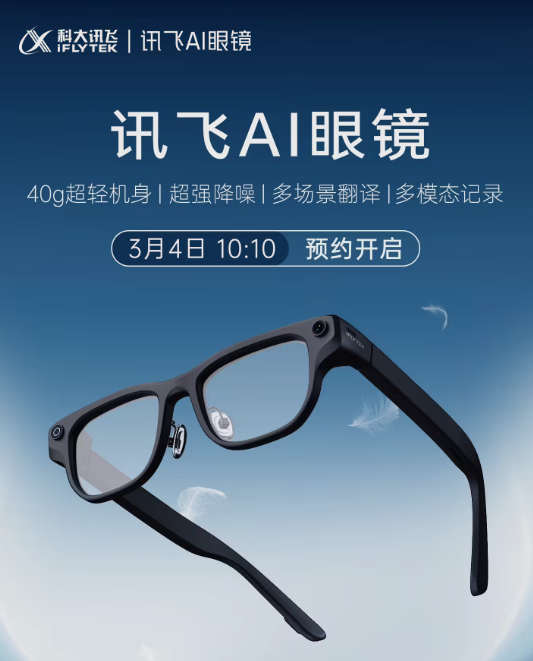
At MWC 2026, Xunfei unveiled revolutionary AI glasses weighing just 40 grams - lighter than most sunglasses. The secret sauce? Lip-reading technology that cuts through noisy environments, making conversations flow naturally across languages. Already available for pre-order in China, these glasses could change how we communicate globally.

March 4, 2026
AI translationwearable techlanguage technology