Google's AI Helps Blind Users Explore Streets Virtually
Google's StreetReaderAI Breaks Barriers for Blind Users
Google has unveiled StreetReaderAI, an innovative prototype system designed to make Google Street View accessible to blind and low-vision individuals through natural language interactions. This marks a significant advancement in assistive technology, transforming passive information delivery into active exploration.
How StreetReaderAI Works
The system integrates:
- Computer vision for real-time image analysis
- Geographic Information Systems (GIS) for precise location data
- Large Language Models (LLMs) for contextual responses
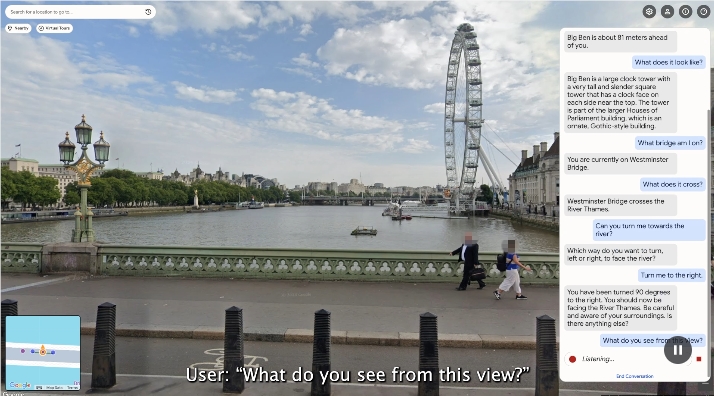
When users virtually "stand" on a street, the AI describes surroundings proactively: "You're facing a brick building with a café to your left and bus stop to your right."
Conversational Interface Enables Natural Exploration
Key features include:
- Intelligent Q&A: Users ask questions like "What's that building ahead?" or "Where does this road lead?"
- Minimalist controls: Navigation via voice commands or keyboard inputs
- Dual-input design: Accommodates different user preferences
The system represents a shift from visual-dependent interfaces to inclusive spatial understanding.
From Accessibility Tool to Equal Experience
While traditional digital maps exclude visually impaired users, StreetReaderAI offers:
- Active exploration rather than passive reception
- Decision-making autonomy in virtual navigation
- Potential expansion to indoor spaces and public transport
The prototype demonstrates how AI can bridge accessibility gaps in digital services.
Key Points:
- First multimodal AI system enabling blind users to explore street views independently
- Combines real-time image analysis with conversational interface
- Uses standard inputs (voice/keyboard) requiring no special hardware
- Currently in prototype phase with potential for broader applications