Google Gemini Brings Science to Life with Interactive 3D Models
Google's Gemini AI Makes Science Tangible
Imagine rotating a DNA helix with your fingertips or watching quantum particles dance in real-time. Google's Gemini AI now makes this possible through groundbreaking interactive 3D models that respond to your commands like a virtual science lab.
Beyond Static Diagrams
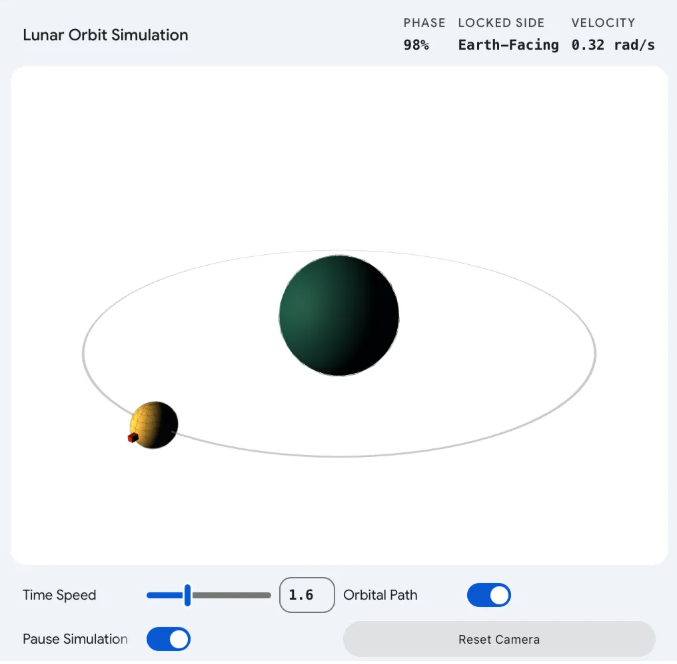
Gone are the days of squinting at textbook illustrations. Gemini's new feature generates dynamic visualizations that respond to your curiosity. "It's like having a science tutor who can materialize any concept you describe," explains Dr. Elena Torres, a physics educator who tested the beta version. Want to see how gravity affects planetary motion? Simply ask Gemini to "show me the moon orbiting Earth" and you'll get a customizable simulation where you can adjust variables like velocity and gravitational pull using intuitive sliders.
How It Works
The magic happens when users phrase requests with action-oriented prompts:
- "Demonstrate the double-slit experiment" reveals quantum weirdness through adjustable wave patterns
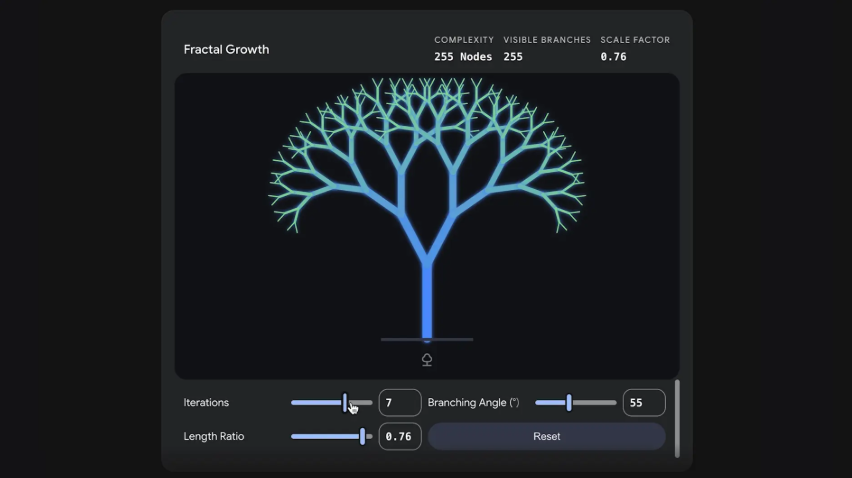
- "Help me visualize fractal growth" lets you manipulate branching structures
- "Show me molecular bonding" presents 3D models you can rotate and examine
"We've moved from explaining science to letting people experience it," says Google's AI product lead Mark Chen. The system builds on Gemini's existing educational capabilities but adds crucial tactile dimensions. Where before you might get a static diagram of a fractal, now you can watch it grow as you tweak the angle between branches.
Current Limitations
The rollout has some notable exceptions:
- Not available for school Google accounts
- Workspace users temporarily excluded
- Requires selecting the "Pro" model for full functionality
Google assures these restrictions are temporary while they optimize performance for group learning environments.
Why This Matters
Visual learning gets a quantum leap with this update. Studies show interactive models improve concept retention by up to 40% compared to traditional methods. As biology student Priya Nandi puts it, "Finally I can hold a mitochondria in my hands—well, virtually at least."
Key Points
🔬 Hands-on learning: Manipulate scientific models like physical objects
🌌 Real-time adjustments: Change variables and see immediate effects
🚀 Growing availability: Rolling out to all personal accounts (except education/Workspace)
📱 Simple access: Just ask Gemini to "show" or "demonstrate" concepts