Google Colab and KaggleHub Team Up to Simplify Data Science Workflows

Google Colab Meets KaggleHub: A Match Made in Data Science Heaven

Data scientists rejoice—Google has just made your workflow significantly smoother. The tech giant recently unveiled a seamless integration between its Colab notebooks and KaggleHub, eliminating the need to juggle multiple platforms when working with datasets and models.
Image

One-Click Access Revolution

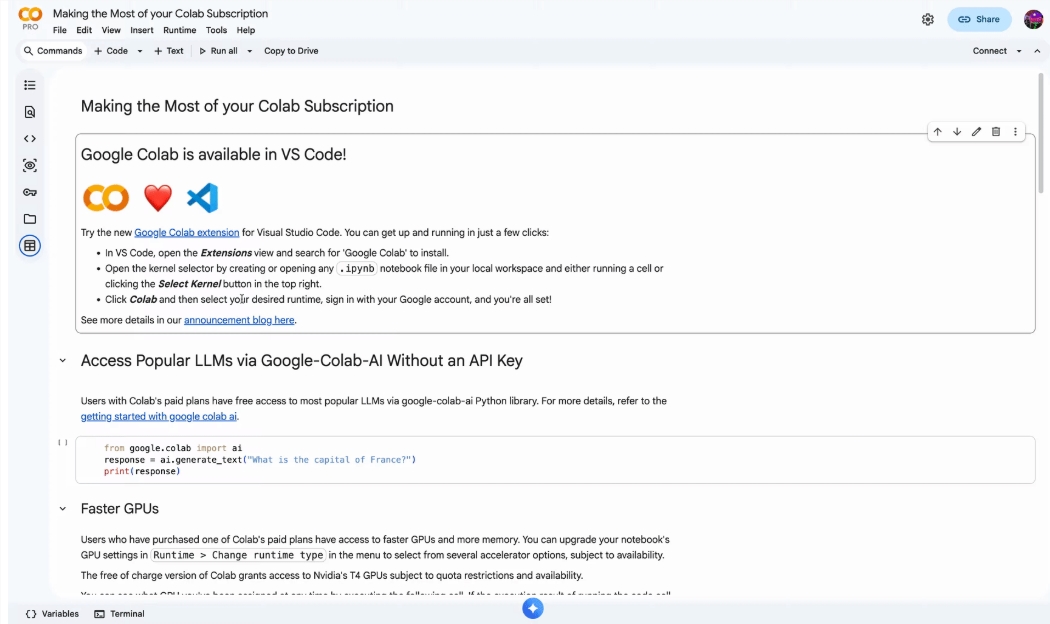
The new data explorer feature appears in Colab's left toolbar, acting like a personal research assistant for your data science projects. With built-in filters for resource type and relevance, finding what you need feels more like browsing your favorite online store than digging through technical documentation.

"This integration fundamentally changes how we interact with Kaggle resources," explains a senior data scientist at a major tech firm who tested the beta version. "What used to take 15 minutes of setup now happens instantly."

From Friction to Flow

Previously, accessing Kaggle data in Colab resembled assembling furniture without instructions. Users needed to:

  • Create Kaggle accounts
  • Generate API tokens
  • Download credential files
  • Configure environment variables
  • Master command line interfaces

The process often tripped up beginners when credentials went missing or paths didn't match. Now, while authentication still occurs behind the scenes, the user experience feels as simple as streaming music—click what you want and it just works.

Under the Hood: How It Works

KaggleHub serves as the bridge between platforms, offering consistent access whether you're working in:

  • Kaggle notebooks
  • Local Python environments
  • Google Colab

The system cleverly reuses existing credentials when needed while providing intuitive functions like model_download() and dataset_download(). When you select a resource in Colab's explorer, it generates ready-to-run code snippets that handle all the heavy lifting.

Real-World Impact

The implications extend beyond convenience. By lowering technical barriers:

  1. Educators can focus on teaching concepts rather than setup procedures
  2. Researchers spend more time analyzing data than managing infrastructure
  3. Beginners encounter fewer frustration points when starting their data science journey
  4. Teams collaborate more efficiently with standardized access methods

As one early adopter put it: "This feels like when smartphones replaced separate cameras, MP3 players, and GPS devices—everything I need in one place."

Key Points

  • Streamlined workflow: Direct access to Kaggle resources within Colab eliminates platform switching
  • Beginner friendly: Reduces authentication complexity that previously caused headaches
  • Cross-platform consistency: Works identically across Kaggle notebooks, local Python, and Colab environments
  • Time savings: What took multiple steps now happens with a single click
Enjoyed this article?

Subscribe to our newsletter for the latest AI news, product reviews, and project recommendations delivered to your inbox weekly.

Weekly digestFree foreverUnsubscribe anytime

Related Articles

News

Alibaba Cloud Revolutionizes AI Access with Multi-Model Switching

Alibaba Cloud's Bailian platform has introduced a groundbreaking Coding Plan that allows seamless switching between four top Chinese open-source AI models. Developers can now effortlessly toggle between Qwen3.5, GLM-5, MiniMax M2.5 and Kimi K2.5 models based on their specific needs, eliminating the hassle of managing multiple APIs. This innovation promises greater flexibility, cost savings, and stability for businesses exploring AI solutions.

February 25, 2026
ArtificialIntelligenceCloudComputingTechInnovation
Goldman Sachs Report Dampens AI Hype: Little Economic Impact Seen
News

Goldman Sachs Report Dampens AI Hype: Little Economic Impact Seen

Goldman Sachs economists deliver sobering news about AI's economic impact. Despite massive corporate investments, their analysis shows artificial intelligence contributing almost nothing to U.S. GDP growth in 2025. The report cites import-heavy hardware purchases and disappointing productivity gains as key factors tempering expectations.

February 24, 2026
Artificial IntelligenceEconomic AnalysisProductivity
News

DeepMind Pioneer Charts New Course With Bold AI Startup

David Silver, the visionary behind DeepMind's AlphaGo, has stepped away to launch Ineffable Intelligence - an ambitious venture aiming to redefine artificial intelligence. With plans for groundbreaking autonomous learning systems and nearly $1 billion in seed funding, Silver's move could reshape how we think about machine intelligence.

February 22, 2026
ArtificialIntelligenceTechInnovationMachineLearning
News

Chinese Tech Giants Unveil Cutting-Edge AI Models During Spring Festival Rush

This Lunar New Year witnessed an AI arms race among China's tech leaders. ByteDance's Seedance 2.0 brings Hollywood-quality video generation to smartphones, while Zhipu's GLM-5 model doubles down on processing power with its massive 745 billion parameters. Meanwhile, MiniMAX and DeepSeek are taking their innovations global. The flurry of announcements sent shockwaves through stock markets, with AI-related shares soaring up to 70%.

February 12, 2026
ArtificialIntelligenceChineseTechGenerativeAI
Gmail Gets Smarter: Google's Gemini AI Transforms Email Search
News

Gmail Gets Smarter: Google's Gemini AI Transforms Email Search

Google has supercharged Gmail with its Gemini3 AI, bringing natural language search to your inbox. Now you can ask questions like 'What was the plumber's quote?' and get instant answers. The update also includes free writing assistance, smarter replies, and an upcoming 'AI Inbox' that prioritizes important messages while respecting your privacy.

January 9, 2026
GoogleGmailGeminiAI
Microsoft Copilot Gets Smarter with GPT-5.2 Upgrade
News

Microsoft Copilot Gets Smarter with GPT-5.2 Upgrade

Microsoft's Copilot just leveled up with GPT-5.2, bringing expert-level reasoning to everyday tasks. The free upgrade helps users tackle complex spreadsheets, code reviews, and document analysis with newfound efficiency. Benchmark tests show dramatic improvements - the model now matches professionals in 70% of tasks compared to GPT-5's 38%. Particularly impressive are its perfect math scores and breakthroughs in programming challenges.

December 30, 2025
MicrosoftAIProductivity