
DingTalk Introduces AI Customer Service Assistant for Businesses

On March 17, 2025, DingTalk, a leading collaboration platform, unveiled its AI Customer Service Assistant, a cutting-edge feature designed to enhance customer support for businesses. The assistant automatically integrates with company websites, official accounts, and other platforms, providing direct assistance to both consumers and corporate clients.

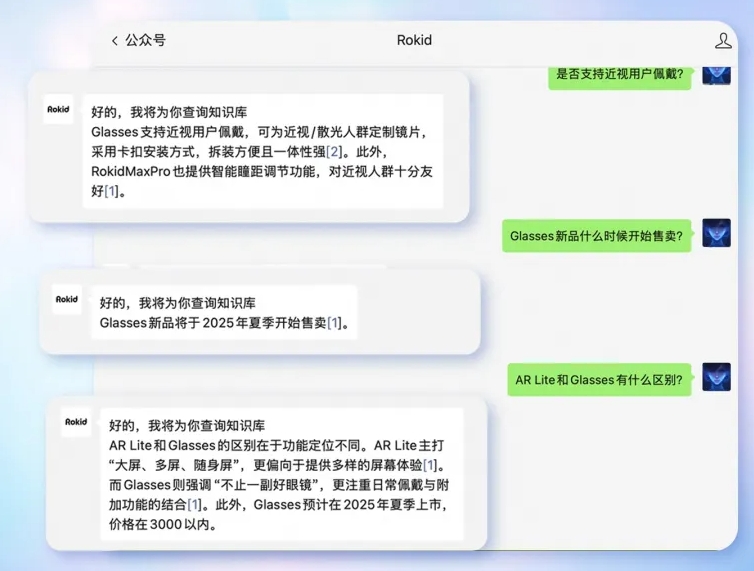
This innovative tool has already been adopted by over 700 companies, including industry leaders such as Cloudminds Technology, Rokid, Redline, AIW Electronics, and Precise Learning. The AI assistant leverages multi-round conversations to accurately understand user needs and effectively address complex inquiries, such as detailed product comparisons or technical specifications.

When a user poses a question, the assistant first searches its knowledge base for relevant information. It then utilizes large language model (LLM) capabilities to deliver professional and precise responses. Unlike traditional chatbots that offer robotic replies, the DingTalk AI assistant functions as a "powerful brain" that has thoroughly digested product manuals, technical documents, and service processes. It provides 24/7 online service with response times measured in seconds.
Image

In addition to its core functionality, DingTalk has enabled the deployment of the AI assistant on external platforms such as WeChat service accounts, subscription accounts, mini-programs, and company websites. This allows businesses to offer seamless customer service across multiple channels. Whether a user is interacting with a WeChat official account or browsing a company website, they may be engaging with the DingTalk AI assistant.

Since its initial launch in January 2024, DingTalk's AI capabilities have evolved into a comprehensive product system spanning general functionalities to vertical scenarios. The new AI Customer Service Assistant can be set up in just three steps and offers three key advantages:

  1. Companies can instantly transform existing product manuals, technical documents, or website links into training materials for the AI assistant. This eliminates the need to build a knowledge system from scratch and allows for adaptation to external knowledge bases through secondary development.
  2. Businesses do not need to develop their own large language models. Instead, they can create, train, and deploy the AI assistant entirely within DingTalk. Users can choose from multiple underlying models and integrate workflow capabilities for multi-person collaboration and continuous service.
  3. The assistant synchronizes user feedback with multi-dimensional tables and other DingTalk applications like Yida, automatically capturing customer suggestions and technical issues.

Moreover, DingTalk provides free access to the AI assistant's multi-platform deployment capabilities, enabling businesses to publish it on websites, official accounts, mini-programs, and more with just one click.

Key Points

  1. DingTalk's AI Customer Service Assistant integrates with company websites and official accounts for seamless customer support.
  2. Over 700 companies have adopted the tool since its launch in January 2024.
  3. The assistant uses large language models to provide accurate responses in seconds.
  4. It supports multi-platform deployment on WeChat accounts, mini-programs, and websites.
  5. Businesses can train the assistant using existing materials without building new knowledge systems from scratch.

Enjoyed this article?

Subscribe to our newsletter for the latest AI news, product reviews, and project recommendations delivered to your inbox weekly.

Weekly digestFree foreverUnsubscribe anytime

Related Articles

Tencent's AI Assistant Caught Swearing in Holiday Messages
News

Tencent's AI Assistant Caught Swearing in Holiday Messages

Tencent's AI assistant Yuanbao sparked outrage after generating New Year greeting images with profanity instead of festive wishes. Users reported similar incidents earlier this year where the AI responded with personal insults during coding help requests. The company apologized, calling it an 'uncommon abnormal output,' while experts warn this exposes fundamental challenges in controlling large language models.

February 25, 2026
AI EthicsLarge Language ModelsTech Controversy
News

JD.com Unveils Powerful JoyAI Model to Boost AI Innovation

Chinese e-commerce giant JD.com has open-sourced its new JoyAI-LLM-Flash model on Hugging Face. With 4.8 billion parameters and trained on 20 trillion text tokens, this AI powerhouse shows remarkable reasoning and programming capabilities. The innovative FiberPO framework helps solve traditional scaling issues while boosting efficiency.

February 16, 2026
JoyAILarge Language ModelsJD.com
China's GLM-5 AI Model Breaks Into Global Top Four
News

China's GLM-5 AI Model Breaks Into Global Top Four

China's AI sector celebrates a major achievement as Zhipu AI's GLM-5 model climbs to fourth place in global rankings, matching Anthropic's Claude Opus4.5. The newly open-sourced model boasts impressive upgrades including doubled parameter size and cutting-edge architecture improvements. Developers can now access its high-speed version through Silicon Flow AI Cloud.

February 13, 2026
AI DevelopmentChinese TechLarge Language Models
News

Open-Source AI Models Pose Security Risks as Hackers Exploit Unprotected Systems

A new study by SentinelOne and Censys reveals thousands of unprotected open-source AI models being exploited by hackers. These vulnerable systems, often stripped of security features, are being used to generate harmful content like phishing emails and disinformation campaigns. Researchers found that 25% of analyzed instances allowed direct access to core system prompts, with 7.5% modified for malicious purposes. The findings highlight growing concerns about unregulated AI deployment beyond major platforms' safety measures.

January 30, 2026
AI SecurityOpen Source RisksCybersecurity Threats
News

Step Star Secures Whopping 5 Billion Yuan Boost Amid AI Race

Shanghai's AI startup Step Star just landed China's largest single investment in large models this year - a staggering 5 billion yuan. The funding round attracted top-tier investors while marking a strategic shift with AI veteran Yin Qi taking the chairman role. This massive cash injection will fuel their ambitious plans to develop world-class foundational models and accelerate AI integration across devices.

January 26, 2026
Artificial IntelligenceTech FundingChinese Startups
News

Davos Warning: Education AI Needs More Than Just Big Models

At Davos, Squirrel AI's Liang Jing delivered a wake-up call about the education AI bubble. She argues that current solutions relying on generic large language models fail to truly understand teaching. Real educational AI requires deep specialization and understanding of learning processes - not just polished answers.

January 23, 2026
AI EducationEdTechLarge Language Models