Chinese OCR Project PaddleOCR Takes GitHub by Storm
How PaddleOCR Became GitHub's Hottest OCR Project
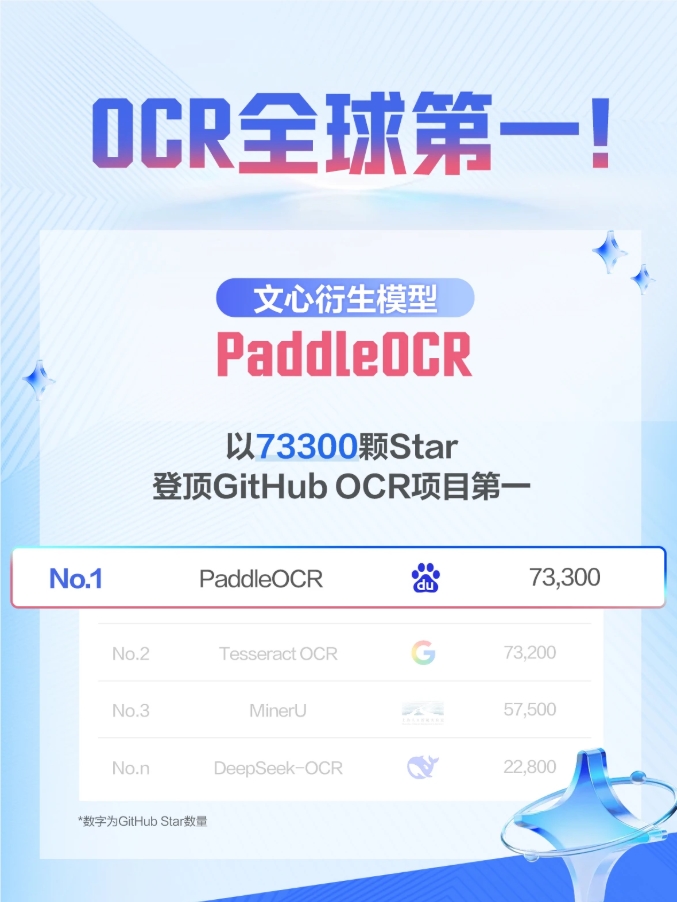
In a remarkable achievement for China's tech sector, Baidu's PaddleOCR project has claimed the top spot on GitHub's star rankings for optical character recognition tools. This open-source powerhouse now stands as the most popular choice among developers worldwide, surpassing even veteran solutions like Tesseract.
Lightweight Design Meets Heavyweight Performance
The project's success stems from its clever engineering. While many OCR systems force developers to choose between accuracy and practicality, PaddleOCR delivers both. Its PP-OCR models achieve impressive recognition rates while remaining small enough to run smoothly on smartphones and embedded devices - a crucial advantage for real-world applications.
"What really sets PaddleOCR apart is how it handles edge cases," explains a Shanghai-based developer who implemented the system for industrial use. "We've tested it on everything from crumpled receipts to scratched serial numbers, and it keeps surprising us with its resilience."
Beyond Basic Text Recognition
PaddleOCR doesn't just read text - it understands context. The system offers specialized solutions for complex tasks like:
- Table extraction from financial documents
- Medical record digitization
- Industrial part identification
- Multilingual document processing (supporting 80+ languages)
This versatility has attracted over 43,000 GitHub stars and thousands of contributors globally. The community actively shares optimization techniques and industry-specific adaptations, creating a virtuous cycle of improvement.
From Labs to Production Lines
The project's real-world impact might be its most impressive feat. Hospitals use it to digitize handwritten notes, factories rely on it for quality control, and banks employ it to process loan applications. One automotive parts manufacturer reported reducing inspection errors by 30% after switching to PaddleOCR.
Key Points:
- Global leader: Most starred OCR project on GitHub
- Practical focus: Balances accuracy with deployability
- Wide adoption: Used across healthcare, finance, and manufacturing
- Community-driven: Thriving ecosystem of contributors and adapters