China's Wukong Quantum Computer Leaps Forward with AI Integration

China's Quantum Computing Breakthrough: When Wukong Meets AI

A new era dawns for China's quantum computing sector as researchers successfully integrate artificial intelligence with the nation's flagship superconducting quantum computer. The "Origin Wukong" system, which came online in January 2024, represents the country's third-generation quantum computing technology and now stands at the forefront of the "quantum + AI" revolution.

The Power Behind Wukong

At the heart of this technological marvel lies the "Wukong Chip," a homegrown 72-qubit superconducting quantum processor. But raw computing power alone doesn't tell the whole story. What makes this development truly remarkable is how researchers have bridged the gap between esoteric quantum physics and practical applications.

"We're not just pushing qubit counts," explains Dr. Li Wei, lead researcher on the project. "The real breakthrough comes from making this power usable across various industries and research fields."

Democratizing Quantum Computing

The team didn't stop at hardware improvements. They've introduced two game-changing tools that could reshape how we interact with quantum systems:

  1. Origin Brain: This specialized AI model acts like a quantum programming tutor, combining domain expertise with cutting-edge machine learning to guide users through complex quantum algorithms.

  2. QPanda3 Runtime MCP Service: Imagine controlling a quantum computer as easily as chatting with a friend. That's essentially what this service offers, translating natural language requests into quantum operations without requiring users to master low-level programming.

"Before these tools, working with quantum computers felt like trying to read ancient scrolls without a dictionary," says computer science professor Zhang Min. "Now it's more like having a knowledgeable guide by your side."

Practical Applications Come Into Focus

The implications extend far beyond academic circles:

  • Pharmaceutical companies could simulate molecular interactions for drug discovery
  • Financial institutions might optimize complex investment portfolios
  • Materials scientists can explore new superconductors at unprecedented speeds

    What was once confined to specialized laboratories is now accessible through cloud platforms, potentially accelerating innovation across multiple industries.

Key Points:

  • China's Origin Wukong represents a major leap in practical quantum computing
  • New AI integration makes the technology more accessible to non-specialists
  • The 72-qubit system comes with user-friendly interfaces and expert guidance tools
  • Cloud availability could spur innovation across multiple industries
Enjoyed this article?

Subscribe to our newsletter for the latest AI news, product reviews, and project recommendations delivered to your inbox weekly.

Weekly digestFree foreverUnsubscribe anytime

Related Articles

News

NVIDIA's Open-Source Quantum AI Breakthrough: Error Correction Gets Major Boost

NVIDIA has just shaken up the quantum computing world with its groundbreaking open-source AI model. The 'NVIDIA Ising' system tackles two of quantum's toughest challenges—processor calibration and error correction—with remarkable efficiency. What used to take days now happens in hours, while error correction sees triple the accuracy. Major institutions like Harvard and IonQ are already adopting this game-changing technology that blends quantum mechanics with AI smarts.

April 16, 2026
QuantumComputingNVIDIAAIInnovation
News

Japan's Tech Giants Join Forces to Build Homegrown AI Rival

Tech heavyweight SoftBank is leading an ambitious push to develop Japan's own AI foundation model, partnering with Honda, Sony and other industry leaders. The consortium aims to create a trillion-parameter 'Physical AI' system by 2030, focusing on real-world interaction capabilities. This marks Japan's boldest move yet to reduce reliance on foreign AI technology.

April 14, 2026
ArtificialIntelligenceJapanTechPhysicalAI
Meta's Muse Spark Ignites AI App Surge to Top 5 on App Store
News

Meta's Muse Spark Ignites AI App Surge to Top 5 on App Store

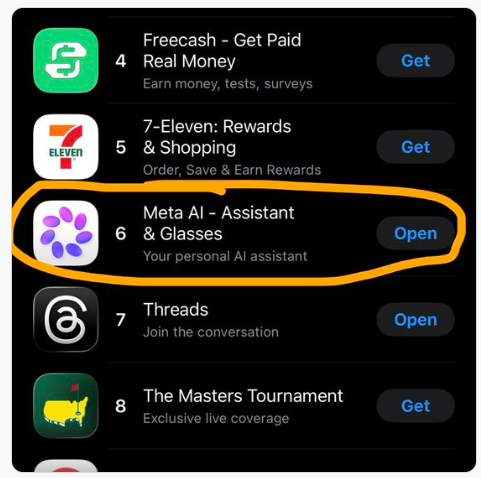
Meta's new AI model Muse Spark has sent its companion app soaring up the charts, jumping from 57th to 5th place on the US App Store overnight. The powerful model's debut drove an 87% spike in iOS downloads, though Android growth remained modest. With multimodal capabilities and visual programming features, Muse Spark is helping users tackle complex queries while creating websites and games through simple prompts. While still trailing ChatGPT and Claude, Meta AI's 60.5 million global downloads show its growing momentum, especially in emerging markets like India.

April 10, 2026
MetaAIMuseSparkAppStoreRankings
News

Spanish startup Xoople lands $130M to launch AI-powered satellite network

Barcelona-based Xoople has secured $130 million in fresh funding, pushing its total capital to $225 million. The ambitious startup is building a satellite constellation specifically designed to feed AI systems with real-time Earth observation data. Partnering with defense contractor L3Harris, Xoople plans to revolutionize how businesses access physical world intelligence for applications ranging from agriculture to urban planning.

April 8, 2026
SpaceTechArtificialIntelligenceEarthObservation
Tech Giants Unite Against AI-Powered Cyber Threats with Glass Wing Project
News

Tech Giants Unite Against AI-Powered Cyber Threats with Glass Wing Project

In a groundbreaking move, Apple, Google, and other tech leaders have joined forces with AI startup Anthropic to combat sophisticated cyber threats. Their 'Project Glasswing' initiative leverages advanced AI to detect vulnerabilities - including a 27-year-old flaw in critical systems. The collaboration marks a new era in cybersecurity defense as artificial intelligence becomes both weapon and shield in digital security.

April 8, 2026
CybersecurityArtificialIntelligenceTechCollaboration
News

Yushu Tech's Robot Vision Breakthrough: One LiDAR to Rule Them All

Yushu Technology has patented a clever mobile robot design that could change how machines see the world. Founder Wang Xingxing's team developed a semi-elliptical robot body with a single top-mounted LiDAR that outperforms traditional multi-sensor systems. This elegant solution cuts costs while improving data processing - proving sometimes less really is more in robotics.

April 7, 2026
RoboticsPatentNewsTechInnovation