ChatGPT Loses Ground as Gemini Gains Momentum in AI Assistant Race
The Changing Face of AI Assistants
The artificial intelligence assistant market is experiencing its first major shakeup since ChatGPT burst onto the scene. What was once OpenAI's undisputed kingdom now shows cracks in its foundation, with competitors—particularly Google's Gemini—making substantial inroads.
Market Share Shifts Tell a Story
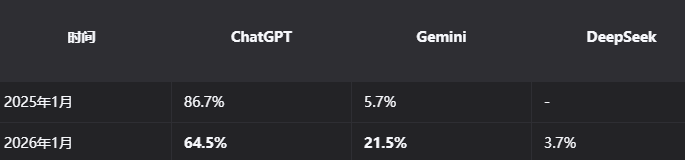
Fresh data from SimilarWeb reveals striking changes in user preferences:
- ChatGPT dropped from commanding 86.7% of global desktop traffic in January 2025 to just 64.5% by January 2026
- Gemini broke through the psychological 20% barrier, reaching 21.5% market share
- Other players like Grok (backed by Elon Musk's X platform) and Claude maintain smaller but growing footholds
"We're seeing the market evolve from single-player dominance to genuine competition," notes tech analyst Rachel Chen. "Users now have clear alternatives that excel in specific areas."
Why Users Are Switching Sides
The migration isn't happening randomly—users are making deliberate choices based on functionality:
Gemini wins points for:
- Superior image generation capabilities
- Strong multilingual support
- Deep integration with Android ecosystems
Meanwhile, Claude attracts developers with its coding prowess, while Grok leverages social media integration through X.
The common thread? ChatGPT's perceived slowdown in innovation compared to rivals' rapid improvements.
OpenAI's Advertising Dilemma
The stakes couldn't be higher for OpenAI as it contemplates introducing ads to ChatGPT. Internal debates reportedly center on timing—with user sentiment already shifting toward competitors, ads might accelerate the exodus.
"It's a classic innovator's dilemma," explains industry watcher Mark Williams. "Monetize too soon and risk alienating users; wait too long and miss crucial revenue opportunities."
The company currently relies heavily on enterprise API sales and Plus subscriptions, but losing free users could undermine its entire ecosystem long-term.
What This Means for AI Consumers
The changing landscape brings both challenges and opportunities:
- More choice means better specialization—users can pick tools tailored to their needs
- Competition drives faster innovation across all platforms
- Monetization pressures may lead to more paid features industry-wide
- Smaller players could carve out profitable niches underserved by giants
The days of one-size-fits-all AI assistants appear numbered as the market matures into specialized segments.
Key Points:
- ChatGPT lost over 20 percentage points of market share in one year
- Google Gemini surpassed 20% adoption for the first time
- Users favor platforms offering specialized capabilities beyond basic chat
- OpenAI faces tough decisions about introducing advertising
- The AI assistant market is diversifying rapidly