ByteDance's Vidi2 AI transforms video editing with human-like understanding

ByteDance's Game-Changing AI Takes Video Editing to New Heights

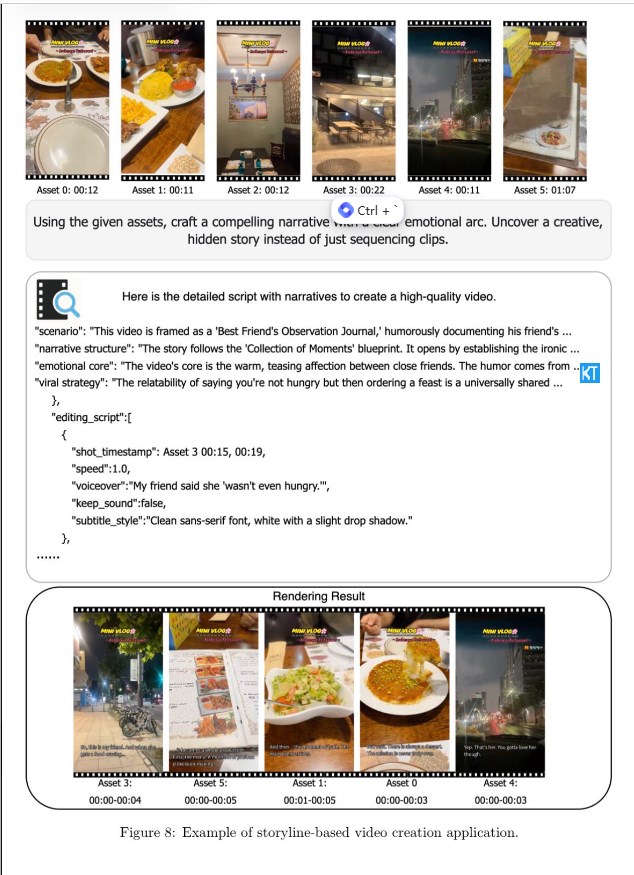
Imagine feeding raw vacation footage into your phone and getting back a professionally edited highlight reel - complete with perfect cuts and captions - in minutes. That future just got closer with ByteDance's launch of Vidi2, their most advanced video understanding AI yet.

Seeing Videos Like Humans Do

What sets Vidi2 apart isn't just its massive 120 billion parameters, but how it comprehends video content. "Traditional AI might recognize a dog in a scene," explains ByteDance researcher Li Wei. "Vidi2 understands that the dog is chasing a ball at minute 3:42 in the left corner of the frame - and can track that action across subsequent shots."

The breakthrough comes from its fine-grained spatiotemporal localization (STG) capability:

  • Pinpoints exact moments when specific actions occur
  • Draws digital boxes around relevant objects throughout scenes
  • Maintains context across hour-long videos without losing details
Image

Benchmarks That Speak Volumes

Independent tests show Vidi2 crushing the competition:

  • 48.75 overall IoU score on temporal retrieval (17.5 points above commercial rivals)
  • 32.57 vIoU for spatial accuracy in complex scenes
  • Processes long-form content up to 60% faster than previous models while maintaining precision

The secret sauce? An upgraded Gemma-3 backbone network paired with adaptive token compression that preserves crucial details even when condensing information.

From Labs to Your Smartphone

The tech is already transforming TikTok:

  • Smart Split automatically converts lengthy clips into viral-ready shorts
  • AI Outline generates engaging titles and story structures from basic prompts
  • All running smoothly on everyday devices - no supercomputer required

"We're essentially putting Hollywood editing suites in creators' pockets," says TikTok product lead Maria Chen. Early testers report cutting production time from hours to minutes.

The Bigger Picture

With over a billion daily users generating endless video data, ByteDance has created an AI flywheel: more usage improves the model, which attracts more users. This virtuous cycle poses serious challenges for standalone AI companies struggling to match such vast training resources.

The research paper is available now, with public demos expected soon. One thing's certain - how we create and consume video content will never be the same.

Key Points:

  • Vidi2 understands videos contextually using advanced STG technology
  • Outperforms rivals significantly in long-form content analysis
  • Already powering real-world tools like TikTok's Smart Split
  • Democratizes professional-grade video editing for mainstream creators
Enjoyed this article?

Subscribe to our newsletter for the latest AI news, product reviews, and project recommendations delivered to your inbox weekly.

Weekly digestFree foreverUnsubscribe anytime

Related Articles

MIT's Automated 'Motion Factory' Teaches AI Physical Intuition
News

MIT's Automated 'Motion Factory' Teaches AI Physical Intuition

Researchers from MIT, NVIDIA, and UC Berkeley have cracked a major challenge in video analysis - teaching AI to understand physical motion. Their automated 'FoundationMotion' system generates high-quality training data without human input, helping AI systems grasp concepts like trajectory and timing with surprising accuracy. Early tests show it outperforms much larger models, marking progress toward machines that truly understand how objects move.

January 12, 2026
computer visionAI trainingmotion analysis
Chinese Researchers Teach AI to Spot Its Own Mistakes in Image Creation
News

Chinese Researchers Teach AI to Spot Its Own Mistakes in Image Creation

A breakthrough from Chinese universities tackles AI's 'visual dyslexia' - where image systems understand concepts but struggle to correctly portray them. Their UniCorn framework acts like an internal quality control team, catching and fixing errors mid-creation. Early tests show promising improvements in spatial accuracy and detail handling.

January 12, 2026
AI innovationcomputer visionmachine learning
News

TikTok Doubles Down on Shenzhen with New AI and Video Tech Hub

ByteDance's TikTok is expanding its footprint in China's tech hub Shenzhen with a second headquarters focused on AI and video technology. The Nanshan District facility will house research labs and business incubators, complementing TikTok's existing Greater Bay Area operations. This move signals the company's growing investment in southern China's innovation ecosystem.

January 8, 2026
ByteDanceShenzhenTechAIInnovation
News

Tech Veteran Launches liko.ai to Bring Smarter Privacy-Focused Home Cameras

Ryan Li, former Meituan hardware chief, has secured funding from SenseTime and iFLYTEK affiliates for his new venture liko.ai. The startup aims to revolutionize home security cameras with edge-based AI that processes video locally rather than in the cloud - addressing growing privacy concerns while adding smarter detection capabilities. Their first products are expected mid-2026.

January 7, 2026
smart homecomputer visionedge computing
News

ByteDance's DouBao AI Glasses Set for Limited Release

ByteDance is gearing up to ship its highly anticipated DouBao AI glasses, but with a twist - the first batch of 100,000 units will be exclusively available to existing DouBao App users. Powered by Qualcomm's Snapdragon AR1 chip, these lightweight glasses focus on audio functionality without a display screen. While the company remains tight-lipped about broader sales plans, industry insiders reveal development is already underway for a second-generation model.

January 6, 2026
wearable techartificial intelligenceByteDance
News

Smart Home Startup liko.ai Lands Funding for Edge AI Vision

AI startup liko.ai has secured its first round of funding from prominent investors including SenseTime Guoxiang Capital and Oriental Fortune Sea. The company, led by smart hardware veteran Ryan Li, aims to transform home automation with edge-based vision-language models that process data locally rather than in the cloud. Their AI Home Center promises smarter, more private smart home experiences.

January 6, 2026
edge computingsmart homecomputer vision