Beijing Unveils Game-Changing XR-1 Robot Brain That Learns Like Humans

China's Robotics Leap: XR-1 Blurs the Line Between Code and Motion
Image

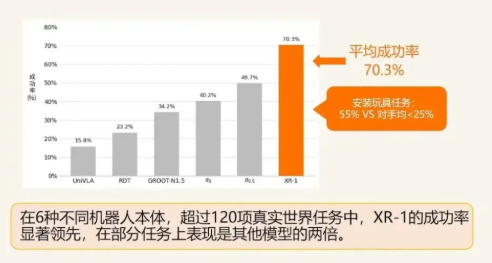
In a quiet laboratory northwest of Beijing, engineers have taught robots a new language - not of words, but of movement. The recently unveiled XR-1 system represents China's most advanced attempt yet to create machines that don't just compute, but physically interact with the world like humans do.

The Robot Cerebellum Comes Alive

Imagine handing a coffee cup to a colleague - your brain effortlessly coordinates vision, grip strength, and arm trajectory. XR-1 replicates this biological magic through what developers call "embodied intelligence." Unlike conventional AI that exists purely in digital space, this system connects cognitive processing directly to mechanical action.

The secret sauce? Two massive training libraries:

  • RoboMIND2.0: Over one million data points teaching object manipulation under real-world variables like changing lighting or cluttered environments
  • ArtVIP: A treasure trove of high-fidelity digital objects that help robots recognize everything from kitchen utensils to industrial tools

"We're not just building better robots," explains lead engineer Dr. Wei Lin. "We're creating universal translators that let any robotic body understand instructions from any AI brain."

From Lab Bench to Factory Floor

What sets XR-1 apart is its chameleon-like adaptability. During demonstrations:

  • A research prototype delicately arranged fragile lab glassware using Franka arms
  • An industrial model simultaneously operated three UR robotic arms on an assembly line The system achieved both feats without hardware-specific reprogramming - a first for Chinese robotics.

The innovation center has strategically positioned XR-1 as the "cerebellum" in their three-part ecosystem:

  1. Body: Their "Embodied Tiantang" physical platforms provide the mechanical muscles
  2. Brain: Previously released WoW and Pelican-VL models handle complex reasoning
  3. Cerebellum: XR-1 translates thoughts into precise motions

Opening Pandora's Toolbox

By open-sourcing this technology, Beijing aims to accelerate global robotics development while establishing China's leadership in embodied AI standards. Early adopters range from automotive manufacturers redesigning production lines to healthcare startups developing assistive devices.

The implications extend beyond industry. During testing phases, XR-1-powered robots:

  • Learned new manual tasks 60% faster than previous systems
  • Maintained precision even when objects were moved or lighting changed unexpectedly
  • Demonstrated unprecedented dual-arm coordination for tasks like opening containers

As robotics researcher Elena Petrov notes: "This isn't incremental improvement - it's redefining how machines learn physical skills."

Key Points:

  • 🧠 XR-1 serves as robotic "cerebellum," converting AI decisions into precise movements
  • 🔄 Breakthrough cross-platform compatibility works across major robot brands
  • 📚 Comes with RoboMIND2.0 (1M+ data points) and ArtVIP digital asset library The open-source release invites global collaboration on embodied intelligence standards
Enjoyed this article?

Subscribe to our newsletter for the latest AI news, product reviews, and project recommendations delivered to your inbox weekly.

Weekly digestFree foreverUnsubscribe anytime

Related Articles

Gaode's ABot-M0 Gives Robots a Universal Brain
News

Gaode's ABot-M0 Gives Robots a Universal Brain

In a major leap for robotics, Gaode has open-sourced ABot-M0, the world's first unified architecture for robot intelligence. This 'universal brain' outperforms previous models by 30% on key benchmarks, while its complete open-source package—including algorithms and training data—could revolutionize how we develop smart robots for homes and industries.

April 1, 2026
roboticsAIopen-source
News

Zhiyuan Robotics Unveils Week-Long Showcase of AI Breakthroughs

Zhiyuan Robotics, a leader in embodied intelligence, is gearing up for an exciting six-day product showcase starting April 7th. Dubbed 'AGIBOT AI Week', the event promises to reveal cutting-edge innovations aimed at solving real-world industry challenges. From foundational AI infrastructure to complete technology ecosystems, the company plans daily reveals that could reshape how we think about physical AI applications.

April 3, 2026
roboticsAI innovationembodied intelligence
News

ZTE and ByteDance Team Up for Revolutionary AI Phone Launch

ZTE and ByteDance are set to shake up the smartphone market with their deeply integrated AI phone, expected to launch in Q2 2026. The new DotBao model builds on the surprising success of their limited-edition prototype, which resold for up to 36,000 yuan. This partnership marks ZTE's strategic push into AI-powered devices that promise to transform how we interact with our phones.

April 2, 2026
AI smartphonesZTEByteDance
ByteDance Plants Seeds for Future AI Talent with New Campus Recruitment Drive
News

ByteDance Plants Seeds for Future AI Talent with New Campus Recruitment Drive

ByteDance has launched an ambitious campus recruitment program called Seed2027 to cultivate the next generation of AI talent. Targeting 2027 graduates, the initiative focuses on large language models and cutting-edge AI research. Selected candidates will work directly with senior scientists and gain access to powerful computing resources. This early talent grab signals ByteDance's determination to stay ahead in the intensifying AI race.

April 1, 2026
AI recruitmentByteDancemachine learning
News

Amazon's New AI Tool Helps Shoppers Cut Through the Clutter

Amazon is testing an AI-powered 'Compare' feature that transforms how shoppers evaluate products. The tool generates easy-to-digest reports highlighting key differences between items, saving users time and frustration. Rather than clicking through endless product pages, shoppers get side-by-side comparisons of features, pricing, and suitability for their needs - all powered by artificial intelligence.

March 31, 2026
e-commerceartificial intelligenceconsumer tech
Qwen3.5-Omni Ushers in a New Era of AI with Multimodal Mastery
News

Qwen3.5-Omni Ushers in a New Era of AI with Multimodal Mastery

Tongyi Lab's latest AI model, Qwen3.5-Omni, has set a new benchmark with 215 state-of-the-art achievements. This multimodal powerhouse seamlessly processes text, images, audio, and video, outperforming competitors like Gemini-3.1Pro in audio understanding while maintaining top-tier visual and text capabilities. Its innovative Hybrid-Attention MoE architecture enables processing of lengthy audio and video content with remarkable precision. From real-time voice control to personalized voice cloning, Qwen3.5-Omni is redefining how we interact with technology.

March 31, 2026
AI innovationmultimodal AIvoice technology