

AI Tool 'Yujing' Transforms WeChat Articles into Actionable Knowledge
AI Tool 'Yujing' Transforms Digital Clutter into Structured Knowledge
In today's information-saturated world, unread articles saved from WeChat Official Accounts often become digital dead weight. A new AI information management tool called Yujing is addressing this challenge by not only organizing neglected content but transforming it into usable knowledge.
Unified Cross-Platform Hub
Yujing functions as an intelligent cross-platform aggregator, allowing users to subscribe to WeChat Official Accounts, podcasts, and major websites without switching apps. Content appears in a streamlined feed with clear metadata (cover images, summaries, publication times), reducing decision fatigue and minimizing clickbait traps.
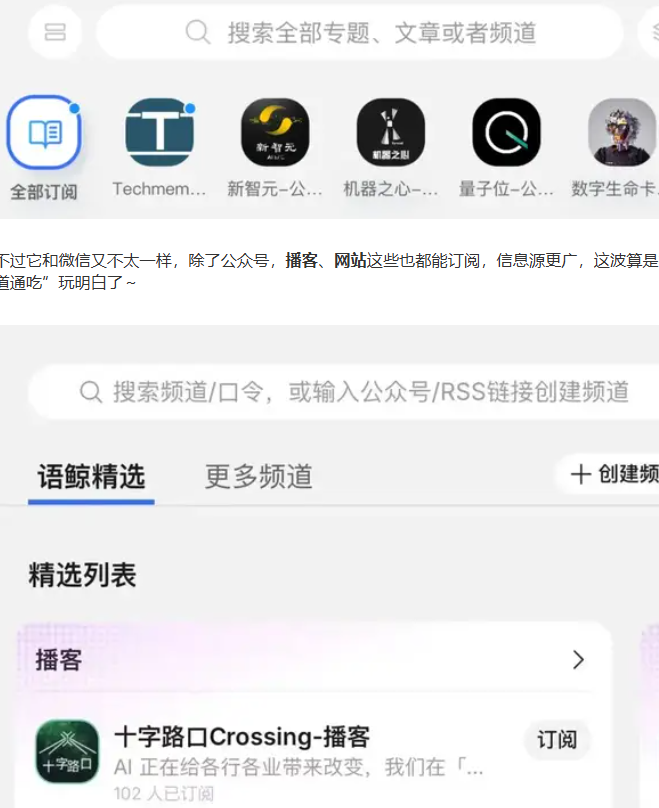
Smart Keyword Channels
The tool's standout feature is its AI-powered keyword tracking. Users input terms like "Musk" or "AI chips," and Yujing curates relevant articles from across subscribed sources. This eliminates manual searches through dozens of accounts while maintaining real-time updates—a boon for researchers and professionals.
Automated Daily Briefings
Each morning, Yujing generates a personalized AI digest, distilling hundreds of subscribed sources into themed summaries (e.g., technology, finance). Early adopters report needing just 5 minutes to grasp key developments—a 50% time reduction compared to traditional browsing.
Deep Content Processing
The web version supports PDFs, Word docs, and URL imports, with AI parsing complex documents (e.g., academic papers) into structured sections (methodology, results). Testing shows accurate breakdowns of 20-page papers within seconds. Note: OCR capabilities for text-heavy images remain limited.
Key Points:
- Efficiency gains: Users report doubling productivity in managing information overload.
- Customization: Unlike algorithm-driven platforms (e.g., Toutiao), Yujing prioritizes user-controlled keywords/sources.
- Limitations: Image-based text extraction requires further development.
The tool exemplifies the shift toward "tamed AI"—where users dictate parameters while automation handles execution.


