AI Adoption Soars, But Most Companies Struggle to Scale
The AI Adoption Boom Hits Scaling Roadblocks
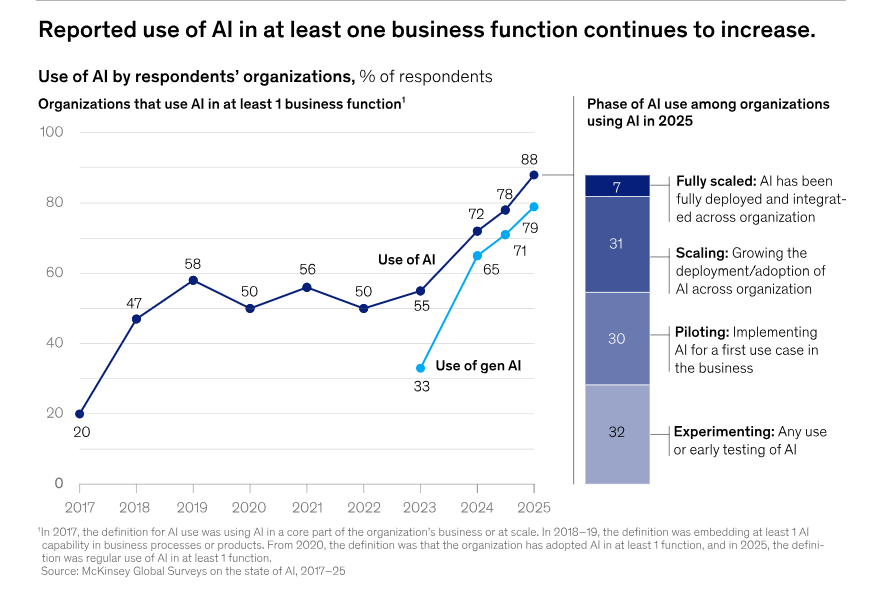
Artificial intelligence has become nearly ubiquitous in the business world, with 88% of companies now using AI in at least one department according to McKinsey's latest "State of AI" report. That's up sharply from 78% just a year ago - clear evidence that what began as experimental technology has entered the mainstream.
But here's the catch: most organizations still treat AI like a science project rather than a core business tool. About two-thirds remain stuck in trial phases, testing isolated applications without enterprise-wide deployment. Only about a third have progressed to scaling their AI initiatives across multiple functions.
"We're seeing widespread experimentation but limited transformation," notes one industry analyst familiar with the findings. "Companies are dipping their toes in the water rather than diving in."
The Scaling Divide
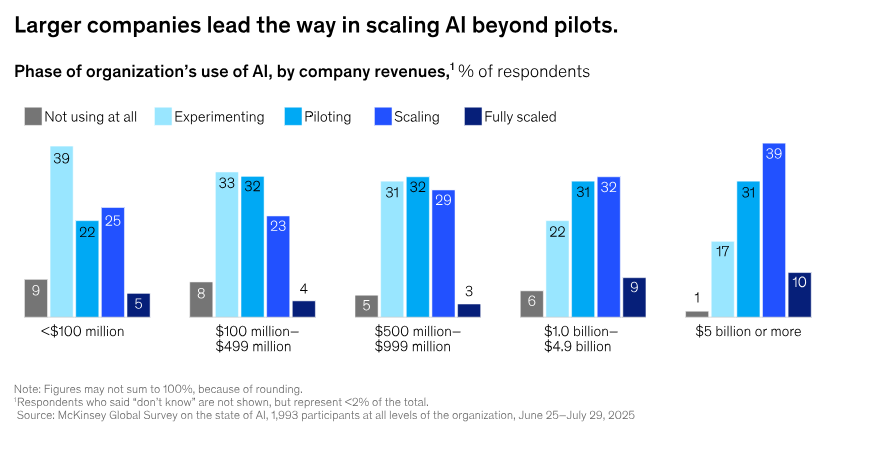
The report reveals a clear size advantage when it comes to AI implementation. Large enterprises (those with over $5 billion in revenue) are significantly more likely to have moved beyond pilots compared to their smaller counterparts. These corporate giants typically have deeper pockets for technology investments and more established data infrastructure - critical foundations for scaling AI.
Yet even among these early adopters, financial returns remain modest at best. Only 39% of respondents reported noticeable impacts on EBIT (earnings before interest and taxes), with most seeing effects below 5%. This performance gap suggests many companies haven't yet figured out how to translate technical capabilities into bottom-line results.
From Experimentation to Execution
The real challenge isn't getting started with AI - it's making it work at scale. As one tech executive put it: "Pilots are easy; production is hard." Successful scaling requires more than just technology - it demands workflow redesign, new governance models, and targeted talent investments.
Many organizations struggle with:
- Integrating AI into existing business processes
- Managing data quality and accessibility across departments
- Developing internal skills to maintain and improve models
- Measuring and tracking ROI from AI initiatives
The next frontier? Moving beyond isolated use cases to create enterprise-wide AI strategies that deliver consistent value. As the technology matures, competitive advantage will shift from who has AI to who uses it best.
Key Points:
- 88% adoption rate: AI usage in business functions jumped 10 percentage points in one year
- Scaling gap: Only 1/3 of companies have moved beyond pilot stages
- Size matters: Large firms lead in implementation maturity
- Financial impact limited: Just 39% see measurable EBIT improvements
- Next challenge: Transforming workflows and governance for scaled deployment