
ZTE's Nebula-GUI AI Assistant Achieves 90% Offline Accuracy

ZTE Revolutionizes Smartphone AI with Offline-Capable Assistant

When voice commands translate directly into completed tasks, smartphone interaction reaches new levels of efficiency. ZTE's Nebula-GUI artificial intelligence system, now deployed in flagship devices including the Nubia Z70 Ultra and Z80 Ultra, achieves this through deep OS integration that eliminates manual app navigation.
Image

Technical Breakthroughs in Edge AI

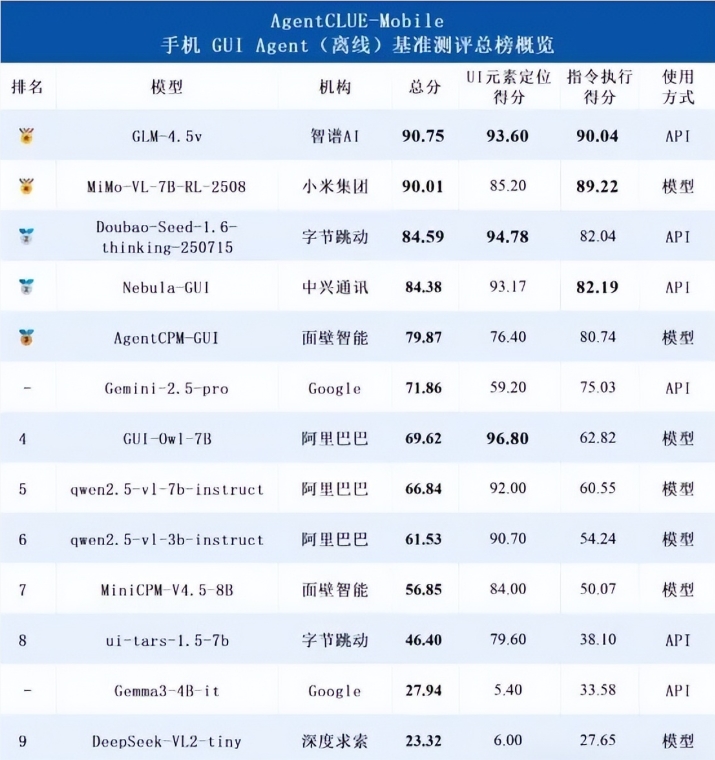
The 7-billion-parameter model recently scored 84.38 in authoritative GUI Agent evaluations, demonstrating particular strength in:

  • Offline operation: All processing occurs on-device
  • Complex task execution: Multi-step processes like transportation bookings
  • Speed: Response times surpassing cloud-dependent alternatives

Current implementation supports 30+ mainstream Chinese apps including 12306, Meituan, and WeChat, achieving 90%+ accuracy for common use cases.

Solving the Chinese GUI Data Challenge

ZTE engineers developed an innovative pipeline to address the shortage of quality training data:

  1. Automated screenshot collection
  2. Semantic annotation systems
  3. Synthetic instruction generation This framework created thousands of operational pathways while reducing production costs by 40% compared to manual methods.

The team then applied supervised fine-tuning (SFT) to transform a general multimodal model into a specialized GUI agent capable of:

  • Screen element recognition
  • Intent understanding
  • Dynamic error correction
  • Cross-app permission management

Commercial Deployment and Future Roadmap

The Nebula-GUI rollout represents a paradigm shift from reactive voice assistants to proactive digital agents. ZTE confirms expansion plans for:

  • E-commerce price comparison
  • Multi-modal travel planning
  • Cross-platform data aggregation These enhancements will further reduce manual intervention in daily smartphone use.

Key Points

  • 90%+ accuracy for offline task completion
  • Supports 30+ apps including major Chinese platforms
  • 7B parameter model outperforms larger cloud-based alternatives
  • Proprietary data generation system solves Chinese GUI scarcity
  • Next-gen features targeting complex multi-app workflows
Enjoyed this article?

Subscribe to our newsletter for the latest AI news, product reviews, and project recommendations delivered to your inbox weekly.

Weekly digestFree foreverUnsubscribe anytime

Related Articles

News

China Telecom Backs Mianbi Intelligence in Major Edge AI Push

Mianbi Intelligence has secured hundreds of millions in new funding led by China Telecom, signaling deepening ties between AI startups and telecom giants. The partnership will combine China Telecom's cloud resources with Mianbi's expertise in lightweight AI models, accelerating deployment in sectors like automotive and education. As edge computing gains momentum, this collaboration could reshape how AI reaches everyday applications.

February 28, 2026
Edge ComputingAI FundingTelecom Innovation
News

Microsoft's Copilot Tasks Takes Over Your To-Do List

Microsoft has unveiled Copilot Tasks, a cloud-based AI assistant that handles routine work so you don't have to. Running independently in the cloud, it can organize emails into presentations, manage subscriptions, even hunt for apartments - all while your computer stays free for other work. The system asks permission before sensitive actions like payments, blending automation with peace of mind.

February 27, 2026
MicrosoftAI AssistantProductivity Tools
News

AI Chip Upstarts Snatch $1.1 Billion to Take on Nvidia

While some worry about an AI bubble, investors are betting big on challengers to Nvidia's chip dominance. Three startups - MatX, Axelera, and SambaNova - collectively raised $1.1 billion this week alone. Each brings a different approach: MatX promises a versatile chip for both training and inference, Axelera focuses on ultra-efficient edge computing, while SambaNova teams up with Intel. The funding surge shows investors believe specialized AI chips still have room to grow.

February 25, 2026
AI ChipsSemiconductorsEdge Computing
News

Cisco Reinvents Meeting Tech with Powerful AI-Powered Devices

Cisco unveiled groundbreaking collaboration hardware at ISE Europe that brings AI processing to the edge. Their new Room Kit Pro G2 packs 25x more AI power than before, while the Desk Pro G2 delivers executive-quality video calls. These innovations promise to transform how businesses communicate, putting intelligent processing right where work happens.

February 11, 2026
CiscoAI HardwareBusiness Collaboration
News

Google Chrome Gets Smarter: Your Browser Just Became an AI Assistant

Google is transforming Chrome from a simple web browser into a powerful AI assistant. The latest update introduces Gemini-powered features right in your sidebar - think real-time shopping comparisons, email summaries, and even trip planning without switching tabs. While these upgrades promise to streamline our digital lives, experts caution about privacy concerns as AI takes on more personal tasks.

February 10, 2026
Google ChromeAI AssistantBrowser Technology
Mianbi's Songguo Board Brings AI Development to Your Fingertips
News

Mianbi's Songguo Board Brings AI Development to Your Fingertips

Mianbi Intelligence shakes up hardware development with its new Songguo Board, an AI-native edge computing platform that makes building smart devices as intuitive as playing with LEGO. Powered by NVIDIA Jetson technology and boasting 275TOPS computing power, this innovative board lets developers create everything from personal assistants to robots using simple natural language commands.

February 6, 2026
AI HardwareEdge ComputingNVIDIA Jetson