

XREAL's Project Aura: AR Glasses So Light You'll Forget You're Wearing Them
The Future of AR Just Got Lighter
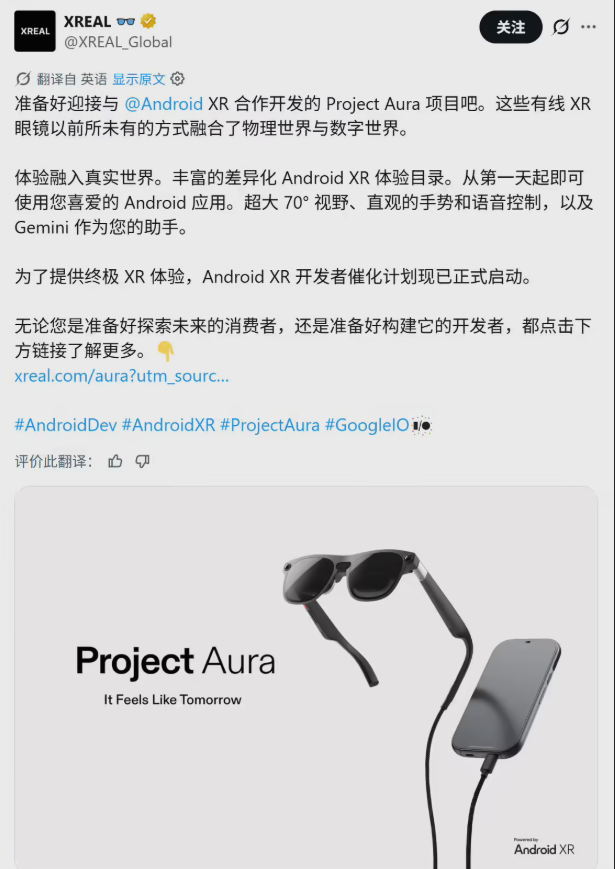
Imagine wearing AR glasses so light you might forget they're on your face. That's the promise of XREAL's newly announced Project Aura, unveiled at Google I/O 2026. Weighing in at under 90 grams - lighter than most sunglasses - these glasses could finally make augmented reality comfortable enough for all-day wear.
Pocket-Sized Power
The secret? XREAL's clever 'separated design' moves the heavy components - processor, battery, and touch module - into a compact external box that slips into your pocket. This isn't just about weight reduction; it's a complete rethinking of how we interact with spatial computing.
"We asked ourselves: why burden your face with components that work better elsewhere?" explained XREAL's chief designer during the demo. The pocket module doubles as both power source and physical controller, complementing the glasses' impressive gesture recognition system.
Seeing in 3D - Naturally
Three wide-angle cameras mounted on the frames track your movements with surprising accuracy. During hands-on tests, pinch-to-zoom gestures worked flawlessly even while walking around - something many VR systems still struggle with.
But the real magic happens when you connect to other devices. Plug into a laptop via DisplayPort, and Project Aura automatically converts flat documents and web pages into floating 3D windows positioned perfectly in your visual space. It's like having multiple monitors wherever you go, without the actual screens.
Android XR Meets Gemini AI
As one of the first devices built on Google's Android XR platform, Project Aura offers full access to spatial apps right out of the box. During demonstrations:
- Google Maps transformed into an immersive 3D navigation guide
- YouTube videos expanded to fill your entire field of view
- Gemini AI intelligently arranged digital content in physical space
The integration goes beyond simple display mirroring. When watching a cooking tutorial, for example, recipe instructions appeared beside the video while ingredient lists automatically popped up near your kitchen counter (if you were at home).
Under the Hood
Powering these experiences is XREAL's custom X1S spatial computing chip working alongside Qualcomm's Snapdragon XR platform. Battery life currently sits around four hours for continuous use - decent for prototypes but hopefully improving before launch.
The company plans to begin shipping Project Aura by late 2026 at an undisclosed price point. If they can deliver on these promises while maintaining that featherlight feel, we might finally see AR glasses transition from niche gadget to everyday essential.
Key Points:
- 90g weight makes them lighter than most sunglasses
- Pocket module houses processor/battery for comfort
- Three cameras enable precise gesture control
- Android XR native with full spatial app support
- Gemini AI integration automatically organizes content
- Late 2026 release planned