Why Australia's Businesses Are Hesitant to Embrace AI

Australia's Cautious Approach to AI Adoption
Image

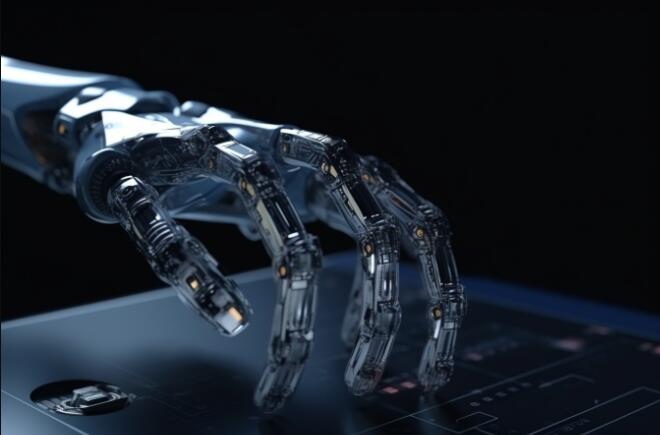
Image source note: The image is AI-generated, and the image licensing service provider is Midjourney.

In boardrooms across Australia, artificial intelligence dominates strategic discussions - yet concrete implementation remains surprisingly limited. The Reserve Bank's latest survey paints a picture of an economy cautiously testing the AI waters rather than diving in headfirst.

The Reality Behind Digital Transformation Claims

While two-thirds of companies claim some level of AI adoption, scratch beneath the surface and a different story emerges. Nearly 40% admit their usage barely extends beyond basic applications - think automated email responses or off-the-shelf tools like ChatGPT for drafting documents.

"We're seeing what I'd call 'AI theater'," explains technology analyst Mark Williams. "Companies want to signal they're keeping up with trends, but meaningful transformation requires more than just licensing Microsoft Copilot."

The numbers reveal this disconnect clearly. Despite an 80% surge in IT investment over the past decade, most funds flow toward maintaining existing systems rather than pioneering new capabilities. Cloud migrations and cybersecurity upgrades dominate budgets while true productivity-enhancing AI initiatives struggle for attention.

Workforce Impacts: More Evolution Than Revolution

The survey brings reassuring news for anxious workers fearing mass job displacement. Companies predict modest workforce reductions - perhaps 5-10% in administrative roles - balanced by new positions in emerging fields like cybersecurity and process optimization.

"AI won't so much eliminate jobs as reshape them," notes Sydney-based HR consultant Priya Chen. "The bank teller becomes a financial advisor. The data entry clerk transitions to data quality specialist."

Barriers Holding Australia Back

Three major roadblocks emerge:

  1. Skills shortages - Finding employees who can implement and manage AI systems proves challenging nationwide
  2. Trust deficits - Many executives remain skeptical about handing critical processes to algorithms
  3. Regulatory fog - Unclear compliance requirements make large investments feel risky

The contrast with global peers is striking. While U.S. and Chinese firms aggressively retrain workforces and lobby for favorable policies, Australian businesses appear stuck in pilot-project purgatory.

Pathways Forward

The report suggests two crucial interventions:

  • Leadership engagement: Getting AI on every board's agenda through government-business partnerships
  • Workforce development: Major reskilling initiatives focused on younger workers who'll spend careers alongside AI

The message is clear: Australia risks falling behind if it doesn't move beyond tentative experimentation toward strategic implementation.

Key Points:

  • Slow adoption: Only about a third of Australian businesses have implemented meaningful AI solutions
  • Limited uses: Most current applications focus on basic tasks rather than transformative changes
  • Workforce impacts: Companies anticipate gradual role evolution rather than sudden job losses
  • Major barriers: Skills gaps, trust issues and regulatory uncertainty hinder progress

Enjoyed this article?

Subscribe to our newsletter for the latest AI news, product reviews, and project recommendations delivered to your inbox weekly.

Weekly digestFree foreverUnsubscribe anytime

Related Articles

Musk Bets Big on AI-Generated Entertainment: xAI's Ambitious Plans for Custom Games and Movies
News

Musk Bets Big on AI-Generated Entertainment: xAI's Ambitious Plans for Custom Games and Movies

Elon Musk's xAI is making waves with plans to revolutionize entertainment through AI-generated content. The tech mogul predicts mass production of personalized games and movies by next year - a bold claim that blends promise with skepticism. While current games use AI assistance, Musk envisions fully autonomous creations from gameplay to design. Industry experts watch closely, wondering if this marks a breakthrough or another ambitious Musk timeline.

January 30, 2026
Artificial IntelligenceGaming InnovationFuture of Entertainment
OpenAI's Billion-Dollar Bet: Tech Titans Vie for AI Supremacy
News

OpenAI's Billion-Dollar Bet: Tech Titans Vie for AI Supremacy

OpenAI is gearing up for what could be the largest fundraising round in tech history, with ambitions to secure up to $100 billion. Heavyweights like NVIDIA, Microsoft, and Amazon are lining up with multi-billion dollar commitments, fueling an AI arms race that's reshaping the tech landscape. The staggering sums reflect the astronomical costs of developing cutting-edge AI - OpenAI alone expects to burn through $70 billion in computing expenses by 2030.

January 30, 2026
Artificial IntelligenceTech InvestmentSilicon Valley
Century-Old Builder Taisei Bets on AI to Empower Its Workforce
News

Century-Old Builder Taisei Bets on AI to Empower Its Workforce

Japan's Taisei Corporation, a construction giant with over a century of history, is reinventing how it develops talent through AI. By implementing ChatGPT Enterprise company-wide, Taisei reports employees saving 5.5 hours weekly while creating thousands of custom AI tools. Their innovative 'Middle Out' approach bridges leadership vision with frontline innovation.

January 30, 2026
AI in ConstructionWorkplace InnovationDigital Transformation
News

Microsoft's AI Bets Pay Off Big: OpenAI and Anthropic Drive Record Profits

Microsoft's latest earnings reveal its AI investments are delivering massive returns. The tech giant reported $7.6 billion in gains from OpenAI alone last quarter, while cloud contracts with AI firms surged to $62.5 billion. With commercial bookings up 230% and infrastructure spending hitting $37.5 billion, Microsoft's AI strategy appears to be firing on all cylinders.

January 29, 2026
MicrosoftArtificial IntelligenceCloud Computing
News

Smart Agents and Embodied AI Dominate China's Top Tech Trends for 2025

China's science community has unveiled its annual tech buzzwords, with artificial intelligence taking center stage. Smart agents and embodied intelligence lead the pack, alongside breakthroughs in nuclear fusion and space exploration. The selection reflects China's growing influence in shaping global technological innovation.

January 29, 2026
Artificial IntelligenceTech TrendsChinese Innovation
News

Tech Visionary Claims Robot AI Breakthroughs Could Win Nobel Prize

Yushu Technology founder Wang Xingxing boldly predicts that integrating large AI models with robotics could produce Nobel-worthy breakthroughs. The company prepares to launch two advanced robots - a humanoid model and industrial quadruped - equipped with cutting-edge spatial intelligence technology. Both products are slated for market release in mid-2026.

January 29, 2026
Artificial IntelligenceRoboticsEmerging Technology