Tencent's New AI Model Teaches Robots to See and Think Like Humans

Tencent's Robotics Breakthrough: When AI Meets the Physical World

In a significant leap for robotics, Tencent's research teams have developed HY-Embodied-0.5 - an artificial intelligence system that might finally bridge the gap between digital intelligence and physical dexterity.

Why This Matters Traditional AI vision systems, while impressive at recognizing images, struggle with the nuances of the three-dimensional world we inhabit. They might identify a coffee cup in a photo, but wouldn't understand how to grasp it without spilling. Tencent's new approach changes that fundamental limitation.

"We're not just teaching AI to see," explains Dr. Li Wei from Tencent Robotics X Lab. "We're teaching it to understand space the way humans do - with depth, texture, and physical consequences."

Two Brains Better Than One

The team introduced a pair of specialized models:

  • MoT-2B: A compact, efficient system designed for real-time responses (perfect for factory robots)
  • MoE-32B: A powerhouse model that tackles complex reasoning tasks

What sets these apart? Traditional AI training often causes "catastrophic forgetting" - where learning new skills erases old ones. Tencent's hybrid Transformer architecture sidesteps this pitfall, allowing continuous learning without performance drops.

Real-World Results During warehouse simulations, robots equipped with HY-Embodied-0.5 demonstrated:

  • 40% faster box-packing speeds than current systems
  • Fewer errors in delicate stacking operations
  • Better recovery from accidental bumps or slips

"The robots don't just follow pre-programmed motions anymore," notes robotics engineer Sarah Chen. "They adapt on the fly, like a human worker would when a package shifts unexpectedly."

The Road Ahead

While the technology shows promise, challenges remain. Scaling these systems for mass production and ensuring safety in unpredictable environments will be the next hurdles. But with models now matching giants like Google's Gemini in benchmark tests, the race to build truly useful service robots just got more interesting.

Key Points

  • Tencent's new AI models add 3D spatial awareness to robot cognition
  • Two specialized versions address different needs: speed vs complex reasoning
  • Outperformed competitors in 22 out of 22 evaluation categories
  • Demonstrated practical improvements in packing and stacking tasks
  • Represents a shift from virtual AI to physically-embodied intelligence
Enjoyed this article?

Subscribe to our newsletter for the latest AI news, product reviews, and project recommendations delivered to your inbox weekly.

Weekly digestFree foreverUnsubscribe anytime

Related Articles

Tencent's DreamNow: Where AI Meets Your Creative Imagination
News

Tencent's DreamNow: Where AI Meets Your Creative Imagination

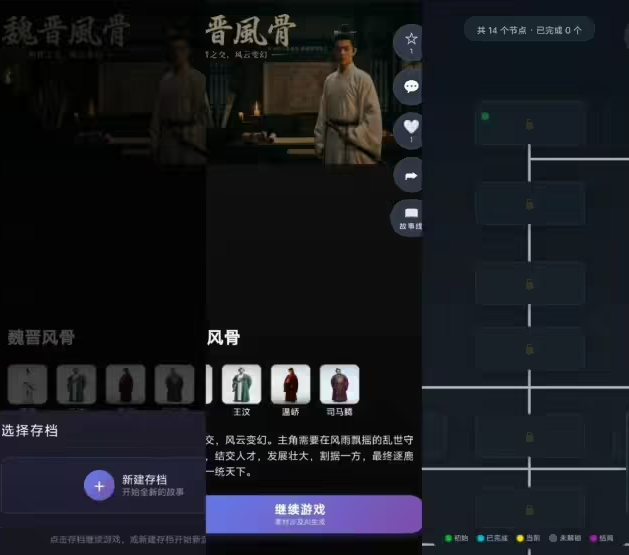
Tencent is stepping into the interactive content arena with its new DreamNow platform. This innovative space lets users explore AI-generated videos and images while preparing to unleash their own creativity. Currently featuring an interactive movie set in China's Wei-Jin period, the platform hints at future tools for user-generated content. As tech giants race to dominate this emerging field, DreamNow's success may hinge on how well it balances creative freedom with intuitive design.

April 7, 2026
AI CreationInteractive MediaTencent Innovation
News

Robot Revolution Nears: Unitree CEO Predicts ChatGPT Moment for Humanoids in Two Years

At the 2026 China Online Media Forum, Unitree Robotics CEO Wang Xingxing made waves by predicting humanoid robots will reach their 'ChatGPT moment' within two to three years. This breakthrough would allow robots to perform 80-90% of tasks through voice commands in unfamiliar environments. Wang emphasized that advanced movement capabilities form the foundation for practical robot labor, with major technological leaps expected this year in areas like tactile perception and multi-arm coordination.

March 30, 2026
RoboticsAI InnovationFuture Technology
Tencent's Lobster Butler: Your AI's New Security Guard
News

Tencent's Lobster Butler: Your AI's New Security Guard

Tencent has unveiled Lobster Butler, a groundbreaking security feature for local AI agents in its PC Manager 18.0 update. This innovative sandbox technology creates a protective shell around AI operations, preventing unauthorized access and privacy leaks while giving users clear visibility into how their data is being used. It's like having a digital bodyguard specifically trained to protect against AI-related threats.

March 16, 2026
AI SecurityTencent InnovationPrivacy Tech
Smartphones Become AI Data Collectors with Ant Digital's Neck-Mounted Hack
News

Smartphones Become AI Data Collectors with Ant Digital's Neck-Mounted Hack

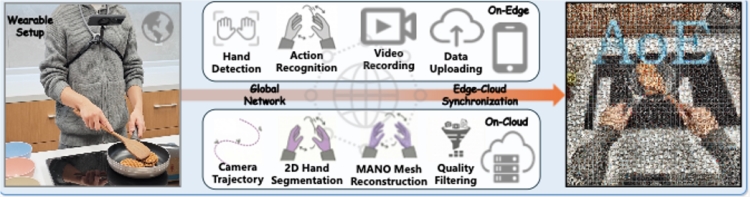
Ant Digital's Tianji Lab has turned everyday smartphones into powerful data collectors for AI training. Their innovative neck-mounted bracket system captures first-person video at a fraction of traditional costs, solving one of embodied intelligence's biggest challenges. Early tests show dramatic improvements - robot task success rates jumped from 45% to 95% when supplemented with this new data source.

March 3, 2026
Embodied IntelligenceAI TrainingComputer Vision
News

Galaxy General Secures 2.5 Billion Yuan Boost as National AI Fund Bets Big on Robots

Galaxy General, a frontrunner in embodied intelligence, has landed a massive 2.5 billion yuan investment round led by China's National Artificial Intelligence Industry Fund. The funding marks the state fund's first foray into humanoid robotics and includes heavyweight backers like Sinopec and SAIC Group. This landmark deal signals growing confidence that intelligent robots could be the next frontier in AI's evolution beyond screens and algorithms.

March 2, 2026
Embodied IntelligenceAI InvestmentHumanoid Robotics
News

Kyoto University Unveils AI Buddhist Monk Robot

Kyoto University researchers have developed Buddhabot Plus, an AI-powered robot monk capable of answering spiritual questions and performing religious rituals. Combining Chinese robotics with ChatGPT technology, this innovation aims to complement human monks rather than replace them. The robot's lifelike movements and scriptural knowledge mark a significant step in blending ancient traditions with modern artificial intelligence.

February 25, 2026
AI RoboticsReligious TechnologyHumanoid Robots