
StepFun AI's New Open-Source Tool Makes Audio Editing as Easy as Typing

Revolutionizing Audio Editing with AI

Imagine tweaking speech recordings with the same ease as editing a text document. That's exactly what StepFun AI has achieved with their newly released Step-Audio-EditX, an open-source audio editing model that's shaking up the industry.
Image

Breaking Down Technical Barriers

The magic lies in how Step-Audio-EditX converts complex audio signal editing into simple token-level operations. While most text-to-speech systems struggle with precise emotional control, this model tackles the challenge head-on through innovative data handling and training methods.

"Traditional systems often miss the mark," explains Dr. Li Wei, lead researcher on the project. "They might generate natural-sounding speech but fail to capture subtle emotional nuances or specific stylistic requests from users."

How It Works: Dual-Codebook Innovation

The model employs a clever dual-codebook tokenizer that processes speech through two distinct streams:

  • A language stream operating at 16.7Hz
  • A semantic stream running at 25Hz

This dual approach allows simultaneous handling of both text and audio tokens, creating unprecedented flexibility in voice manipulation.
Image

Training with Human-Like Precision

The research team trained Step-Audio-EditX using:

  • High-quality data from 60,000 diverse speakers
  • Advanced large-margin learning techniques
  • Human-rated preference data for reinforcement learning

The result? Remarkable improvements in emotional authenticity and stylistic accuracy that users can actually hear.

Putting It to the Test

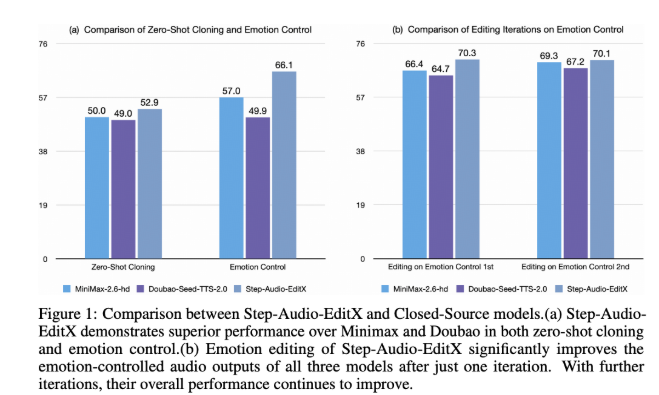
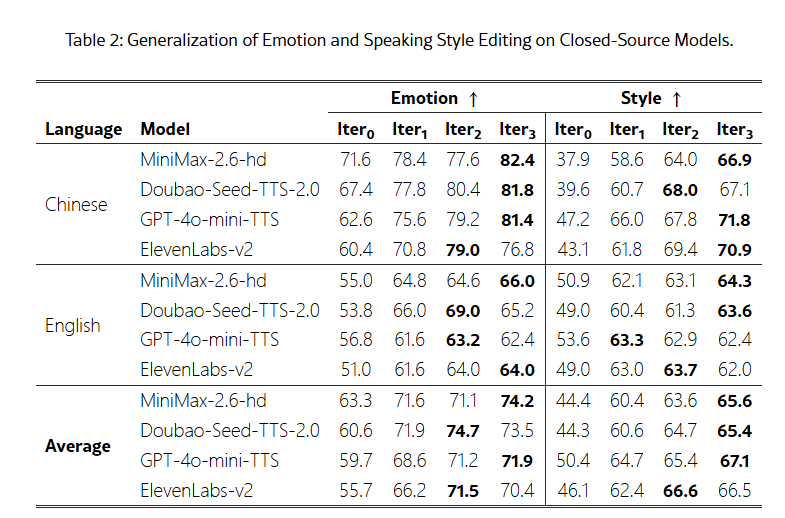
The team developed the Step-Audio-Edit-Test benchmark, using Gemini2.5Pro for evaluation. Results showed significant quality improvements after multiple editing rounds - proving this isn't just theoretical innovation but practical advancement.

Interestingly, Step-Audio-EditX doesn't just work standalone; it can enhance output from closed-source TTS systems too, opening doors for widespread industry applications.

Key Points:

🎤 Intuitive audio editing - Now as straightforward as text manipulation 📈 Emotional precision - Large-margin learning delivers nuanced voice control 🔍 Proven performance - Benchmark tests confirm quality improvements 🌐 Open-source advantage - Accessible to developers worldwide

Enjoyed this article?

Subscribe to our newsletter for the latest AI news, product reviews, and project recommendations delivered to your inbox weekly.

Weekly digestFree foreverUnsubscribe anytime

Related Articles

OpenClaw Hits 280K Stars with Major AI Agent Upgrade
News

OpenClaw Hits 280K Stars with Major AI Agent Upgrade

The open-source AI agent platform OpenClaw just rolled out its biggest update yet, now fully supporting GPT-5.4 and introducing game-changing features like memory hot swapping. With over 280,000 GitHub stars, the project is evolving from experimental framework to production-ready 'agent OS.' Developers can now create smarter, more persistent AI assistants that remember conversations and work seamlessly across platforms.

March 9, 2026
AI AgentsOpen SourceGPT-5
News

MiniMax Brings Voices and Music to OpenClaw's 'Little Crabs'

MiniMax has integrated its advanced speech and music models into OpenClaw's ecosystem, transforming text-based AI assistants into versatile companions. Users can now equip their 'Little Crabs' with custom voices in over 40 languages or turn them into music producers capable of creating everything from pop songs to instrumental pieces. The upgrade requires minimal setup - just upload a file and describe your desired voice style in natural language.

March 9, 2026
MiniMaxOpenClawAI Assistants
NVIDIA's Jensen Huang Calls OpenClaw the Defining Software of Our Time
News

NVIDIA's Jensen Huang Calls OpenClaw the Defining Software of Our Time

At the Morgan Stanley conference, NVIDIA CEO Jensen Huang made waves by declaring OpenClaw the most significant software release today. The open-source project achieved in three weeks what took Linux three decades - becoming history's most downloaded open-source software. Huang outlined his 'five-layer cake' theory of AI infrastructure and explained how agentic AI like OpenClaw creates unprecedented computing demands.

March 6, 2026
Artificial IntelligenceTech InnovationOpen Source
Claude Code Goes Hands-Free: Developers Can Now Dictate Their Programs
News

Claude Code Goes Hands-Free: Developers Can Now Dictate Their Programs

Anthropic's Claude Code takes programming to new heights with its groundbreaking voice mode. Developers can now ditch their keyboards and simply speak commands to refactor code or optimize logic. Currently rolling out to select Windows users, this feature promises to reshape how we interact with AI coding assistants. Meanwhile, Anthropic's financials tell a compelling story - $2.5 billion in annual recurring revenue and user numbers that have doubled since January.

March 4, 2026
AI ProgrammingVoice TechnologyDeveloper Tools
Meituan's AI Browser Faces Code Controversy, Responds with Full Open-Sourcing
News

Meituan's AI Browser Faces Code Controversy, Responds with Full Open-Sourcing

Meituan's Guangnian Zhiwai team has addressed allegations of code copying in its Tabbit AI browser, removing disputed translation features and open-sourcing the project. The dispute arose when developers spotted similarities with the open-source 'Read-Frog' project. While Meituan claims the fork occurred before licensing was clear, the incident highlights growing tensions between rapid AI development and open-source compliance.

March 3, 2026
AI EthicsOpen SourceTech Controversy
News

Alibaba's Qwen AI Models Dominate Global Rankings While Lunar New Year Usage Soars

Alibaba's Qwen series of AI models has taken the open-source world by storm, securing the top four spots on Hugging Face's global rankings. Meanwhile, consumer adoption skyrocketed during Lunar New Year celebrations, with daily active users jumping nearly tenfold. The models' ability to handle complex tasks through simple voice commands suggests AI assistants are moving beyond novelty status into practical everyday use.

March 2, 2026
Artificial IntelligenceAlibaba CloudOpen Source