

Robot Revolution: How Tech Titans Are Racing to Shape Our Physical AI Future
The New Frontier: Physical AI Goes Mainstream
What was once the domain of specialized robotics startups has become the hottest battleground for tech's biggest players. In recent months, companies that made their names in software and chips are now pouring resources into creating intelligent machines that can navigate the physical world.
OpenAI's Full-Stack Approach
OpenAI isn't content with just powering ChatGPT. The company recently formed "OpenAI Robotics," assembling top talent in simulation environments, data collection, and electrical engineering. Their ambitious goal? To develop both the brains and the bodies that will define next-generation robotics. Think of it as trying to create both the iPhone's hardware and iOS simultaneously - a challenge that could give them unprecedented control over how physical AI develops.
NVIDIA Plays to Its Strengths
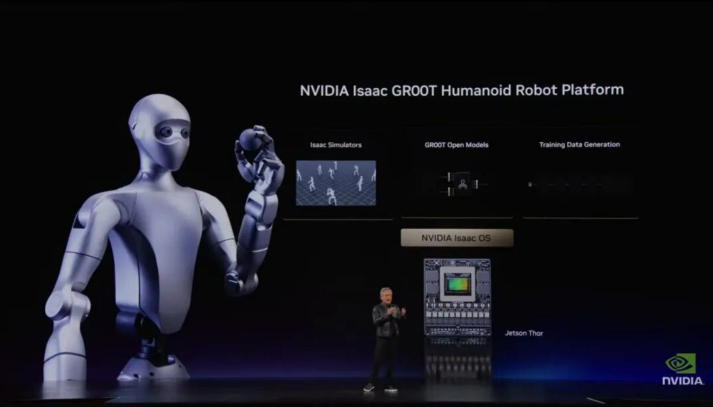
While OpenAI builds vertically, NVIDIA is taking a different tack. The chipmaker is leveraging its dominant position in AI computing to create what might become the "CUDA for robots" - referring to the software platform that made NVIDIA indispensable to AI developers. By combining its Isaac robotics platform, powerful Jetson Thor chips, Cosmos foundation models, and Omniverse digital twins, NVIDIA aims to be the invisible hand guiding robotics innovation worldwide.
Tesla's Manufacturing Edge
Then there's Tesla, with plans so bold they're converting car production lines to manufacture Optimus humanoid robots. Elon Musk's company brings unique advantages: cutting-edge AI algorithms, custom-designed chips, and an automotive supply chain that could make sophisticated robots affordable at scale. If successful, Tesla might do for robots what it did for electric vehicles - turn niche technology into mass-market products.
East vs. West: Diverging Strategies
Interestingly, Chinese and American companies are taking fundamentally different approaches. Many Chinese firms focus on practical applications, leveraging the country's manufacturing might to deploy cost-effective robots directly in factories and warehouses. It's a ground-up strategy: solve real-world problems first, gather data through use, then refine the technology.
American companies, by contrast, often prefer to create virtual proving grounds. Using massive computing power, they simulate countless scenarios to train AI before real-world deployment. Both approaches have merit, but which will prove more effective remains to be seen.
Key Points:
- Physical AI is shifting from hardware to infrastructure and standards
- OpenAI is building vertically, developing both AI brains and robotic bodies
- NVIDIA aims to be the platform that powers all robotics development
- Tesla is betting on scale, applying automotive manufacturing to robotics
- Geographic differences reveal contrasting innovation philosophies