Peking University's New Chip Delivers 228x Energy Efficiency Boost for AI
Peking University Team Shatters AI Power Barriers with Revolutionary Chip
As artificial intelligence systems grow more complex, their hunger for computing power has become insatiable - until now. A team from Peking University's School of Artificial Intelligence, led by Researcher Sun Zhong, has developed an analog computing chip that could change the game for energy-intensive AI applications.
The Power Problem in AI
Modern AI systems, especially those handling image analysis and recommendation engines, often hit a wall when processing massive datasets in real time. Traditional digital chips struggle with two fundamental challenges: computational complexity and memory bottlenecks. "We realized we needed to rethink the entire approach," explains Sun Zhong. "Instead of fighting physics with digital logic, we decided to work with it."
How the New Chip Works Differently
The team's breakthrough lies in using analog computing principles specifically optimized for Non-negative Matrix Factorization (NMF) - a core technique behind many AI applications. Unlike digital chips that process information sequentially as binary code, this new design harnesses physical laws to perform parallel computations directly.
Imagine trying to solve a complex math problem by writing out every step versus seeing the solution emerge naturally through physical interactions. That's essentially what makes this approach so efficient. The chip eliminates much of the overhead required by traditional hardware, cutting both latency and power consumption at the most fundamental level.
Performance That Turns Heads
The numbers speak for themselves:
- 12x faster processing than current high-end digital chips
- 228x improvement in energy efficiency
- 50% storage space savings in image compression tasks
- Significant performance gains in recommendation system training
"These aren't just incremental improvements," notes one industry analyst who reviewed the research. "We're talking about orders-of-magnitude leaps that could redefine what's possible with edge AI devices."
Real-World Impact
The implications extend far beyond laboratory benchmarks. In practical tests:
- Image processing maintained high precision while using half the storage space
- Recommendation algorithms trained faster on commercial datasets than ever before
- The technology proved particularly effective for real-time applications where both speed and power efficiency matter most
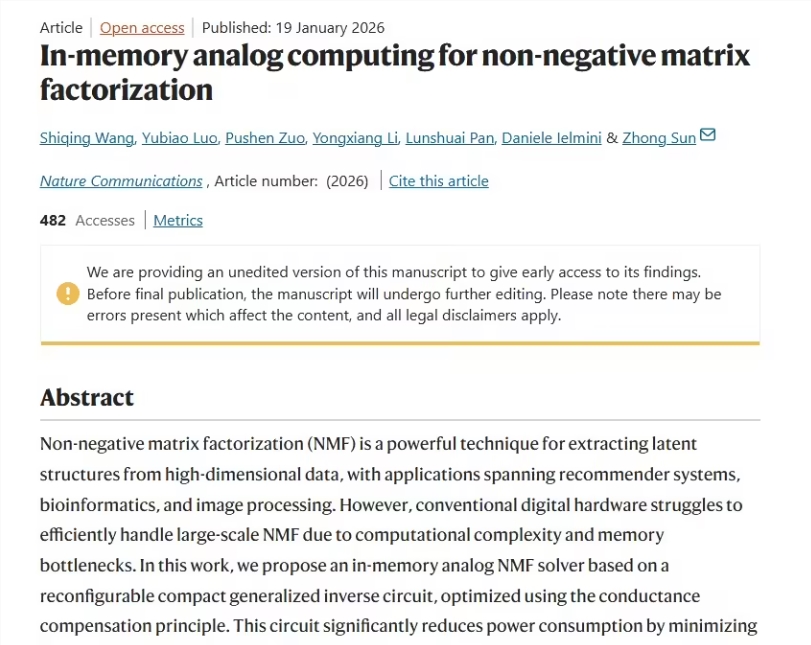
Sun Zhong's team published their findings in Nature Communications on January 19, sparking immediate interest from both academic and industry circles. While commercialization plans aren't yet public, the researchers hint at potential applications ranging from smartphone photography to personalized shopping recommendations.
What This Means for AI's Future
The breakthrough couldn't come at a better time. As AI models grow larger and more complex, their environmental impact has drawn increasing scrutiny. A chip that delivers superior performance while sipping rather than gulping power could help address sustainability concerns without sacrificing capability.
Looking ahead, the team sees potential to adapt their analog computing approach to other challenging AI workloads. "This is just the beginning," Sun Zhong suggests. "We've shown what's possible when we step outside conventional digital paradigms."
Key Points:
- Energy breakthrough: New chip uses 228x less power than current solutions
- Speed advantage: Processes NMF tasks 12 times faster than digital chips
- Storage savings: Cuts image compression space requirements in half
- Real-world ready: Already proving effective in recommendation systems and image processing
- Published research: Findings appeared in Nature Communications January 19 issue