

Microsoft's Webwright: Teaching AI to Code Instead of Click
Microsoft's Webwright: When AI Learns to Code the Web
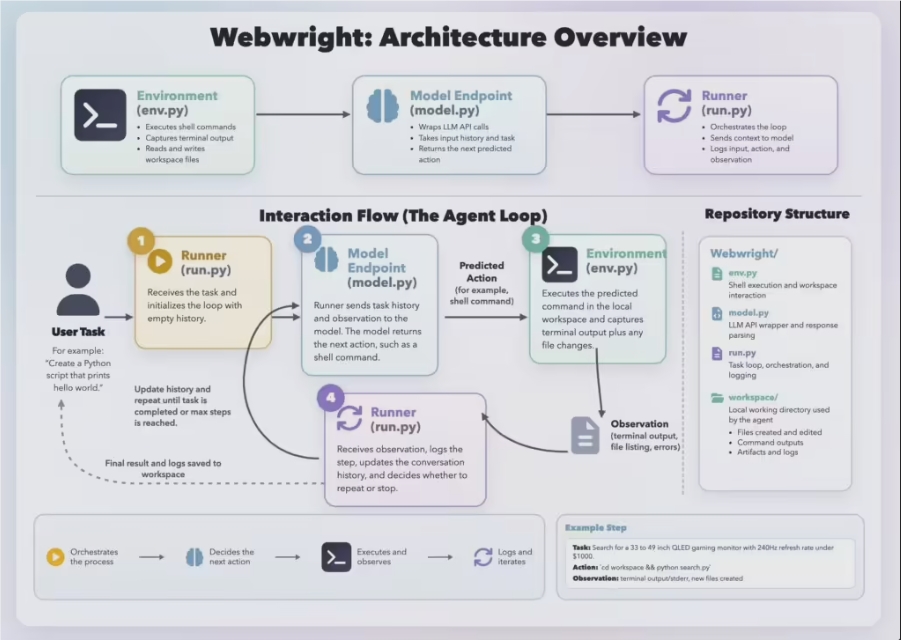
Imagine an AI that doesn't just click around websites like a human, but actually writes the code to automate tasks. That's precisely what Microsoft Research has achieved with Webwright, their newly open-sourced web automation framework. This isn't just another screen-scraping tool - it's fundamentally changing how AI interacts with the digital world.
The Terminal-First Revolution
At its core, Webwright embraces a radical philosophy: "One terminal beats thousands of abstractions." The entire framework weighs in at a lean 1,000 lines of code, built around three streamlined components:
- The Runner (150 lines): The brains behind the operation, managing the agent's workflow
- Model Endpoint (550 lines): A universal interface connecting to various AI models
- Terminal Environment (300 lines): Where the magic happens - executing Playwright scripts and debugging in isolation
Here's how it works in practice: The AI receives a task, thinks through a solution, writes the necessary code, executes it, then learns from the results. This cycle continues until the job's done right.
Why Code Beats Clicks
Traditional web automation tools simulate human actions - clicking buttons, filling forms, scrolling pages. Webwright takes a fundamentally different approach by treating the browser as a programmable interface. The advantages are clear:
Reusable intelligence: Every successful task generates actual Playwright scripts that developers can reuse elsewhere, not just temporary click sequences.
Handling complexity: Code naturally handles loops, conditionals, and functions - essential for multi-step workflows that would overwhelm conventional automation tools.
Self-correcting: When something breaks, Webwright analyzes the error, adjusts its code, and tries again - just like a human developer would.
Solving Automation's Biggest Headaches
Webwright tackles two persistent automation challenges head-on:
The "False Success" Problem: The framework forces the AI to validate its work through a "Gate Self-Check" before declaring victory, preventing premature task completion announcements.
Memory Overload: By automatically summarizing progress every 20 steps, Webwright keeps its context focused even during marathon automation sessions.
Performance That Speaks for Itself
The numbers tell an impressive story. In May 2026 benchmarks:
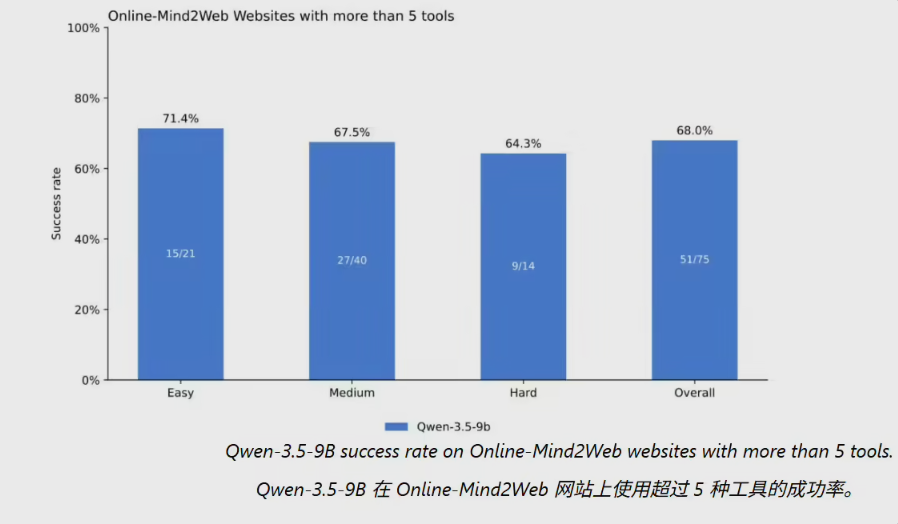
- 86.67% accuracy on the Online-Mind2Web test
- 81.5% improvement over base GPT-5.4 on complex tasks
- Outperformed April's leaderboard champion on long-chain operations
The Bigger Picture
Webwright signals a shift in how we think about AI and automation. By equipping AI with developer-like capabilities rather than just user simulation, Microsoft has opened new possibilities for intelligent automation. The framework is now available on GitHub, inviting developers to explore this new frontier in web interaction.
Key Points
- Webwright generates executable code instead of simulating clicks
- Lean 1,000-line architecture built for efficiency
- Solves traditional automation pain points like false successes
- Outperforms conventional methods in benchmark tests
- Represents a paradigm shift in AI-web interaction