

Kimi Unveils 'OK Computer' Agent Mode for AI Tasks
Kimi Launches Revolutionary 'OK Computer' Agent Mode
Moonshot AI has unveiled "OK Computer," a groundbreaking Agent mode designed to harness the full potential of its Kimi K2 model. The feature entered gradual testing on September 25, 2025, marking a significant advancement in AI-driven task automation.
Intelligent Task Execution
The new mode embodies the "model as Agent" concept, enabling users to delegate complex workflows through simple instructions. 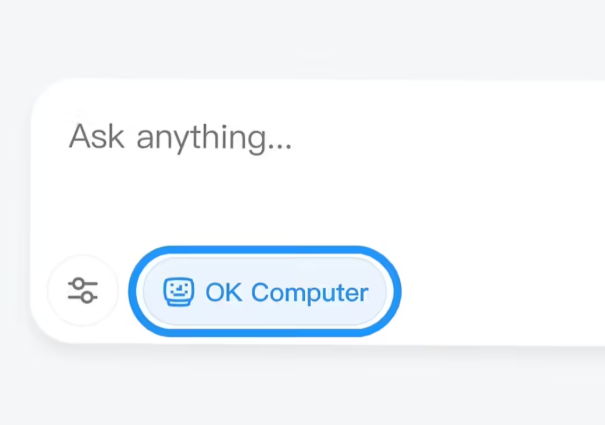 demonstrates how OK Computer autonomously handles:
- Website development
- Data analysis pipelines
- Multimedia generation (images/videos)
- Professional presentation creation
"This eliminates tedious manual steps," explains Moonshot's technical documentation. "Users achieve enterprise-grade outputs through conversational commands."
Technical Foundation
The system builds upon July's Kimi K2 release, which features:
- 1T total parameters (32B activated)
- Mixture-of-Experts architecture
- Benchmark-leading performance in:
- Autonomous programming (Agentic Coding)
- Tool calling integration
- Mathematical reasoning
Early testers—primarily existing Kimi supporters—are providing crucial feedback during this phased rollout. "Their insights will shape the public version," confirms Moonshot's product team.
Industry Implications
Analysts highlight three transformative aspects:
- Democratization of technical workflows: Non-coders can now execute development tasks
- Time compression: Projects requiring days can complete in hours
- Quality standardization: AI ensures professional-grade outputs consistently
The testing phase reportedly focuses on reliability across:
- Edge-case scenarios
- Multi-step workflow integrity
- Security protocols
Key Points:
🌟 OK Computer enables AI-driven task automation through natural language commands
💻 Handles complex technical workflows including coding and data visualization
🚀 Powered by Kimi K2's 1T parameter MoE architecture with specialized activation pathways