
Hugging Face Releases Reachy Mini Robot for AI Developers

Hugging Face Launches Reachy Mini Robot for Open-Source AI Development

Hugging Face announced the availability of its Reachy Mini desktop robot, a tool designed to help developers build, modify, and test artificial intelligence applications with ease. The launch highlights the company's dedication to open-source hardware and fostering collaboration within the developer community.

Two Versions for Different Needs

The Reachy Mini comes in two configurations:

  • Reachy Mini Wireless: Priced at $449, this version runs on a Raspberry Pi 5 and offers wireless connectivity.
  • Reachy Mini Lite: A more affordable option at $299, this model requires an external computing source but provides a cost-effective entry point for developers.
Image

Features and Capabilities

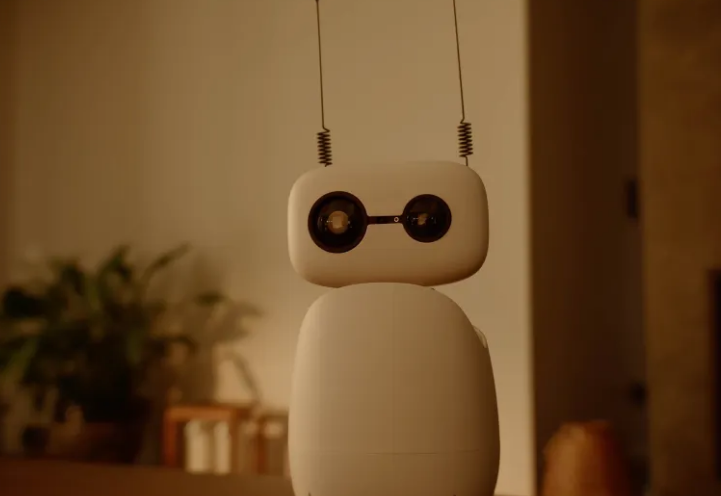
The robot, which resembles a small stuffed toy, features two screens as eyes and two antennas. It is sold as a kit to encourage hands-on assembly. Once built, the robot can be fully programmed using Python and comes preloaded with demonstration programs. It is deeply integrated with Hugging Face's machine learning platform, the Hugging Face Hub, which grants access to over 1.7 million AI models and 400,000 datasets.

Community-Driven Development

Hugging Face CEO Clém Delangue shared insights into the development process, noting that early feedback from prototype testers influenced the final product. One tester reported her 5-year-old daughter enjoyed carrying the robot around the house, reinforcing its appeal beyond just developers.

Delangue emphasized that Reachy Mini is tailored for AI developers, providing a platform to code and test AI applications on physical devices. He expressed hope that the robot would "unleash developers' creativity," enabling them to build diverse applications and share them with the community.

Shipping and Future Vision

The Reachy Mini Lite is set to ship next month, with the wireless version following later this year. Delangue stressed the importance of quick delivery, avoiding lengthy reservation processes.

The launch aligns with Hugging Face's broader goal of promoting open-source robotics. Delangue envisions a future where robots are not controlled by a few companies but are accessible and customizable by users worldwide.

Key Points:

  • Reachy Mini is available in two versions: Wireless ($449) and Lite ($299).
  • The robot is programmable in Python and integrates with Hugging Face Hub.
  • Designed for AI developers to build and test applications on physical hardware.
  • Shipping begins next month for the Lite version, with Wireless following later this year.
  • Hugging Face advocates for open-source robotics to empower users globally.

Enjoyed this article?

Subscribe to our newsletter for the latest AI news, product reviews, and project recommendations delivered to your inbox weekly.

Weekly digestFree foreverUnsubscribe anytime

Related Articles

Xiaomi's CyberOne Robot Shows Off Factory Skills in New Video
News

Xiaomi's CyberOne Robot Shows Off Factory Skills in New Video

Xiaomi has unveiled impressive new capabilities for its third-generation humanoid robot CyberOne, showcasing it working autonomously in an automobile factory for up to three hours. The tech giant recently secured copyright protection for the robotic system, classified as an 'artwork,' along with several related software platforms. This development marks another step forward in China's growing robotics industry.

March 3, 2026
RoboticsArtificialIntelligenceTechInnovation
News

Hyundai Bets $6.1 Billion on AI and Robots in Major Industry Shift

Hyundai Motor Group is making a bold move into future technologies with a massive $6.1 billion investment in South Korea. The project includes building one of the world's largest AI data centers for autonomous vehicles, establishing robotics manufacturing facilities, and developing hydrogen energy solutions. This strategic shift aims to transform Hyundai from an automaker into a leader in smart mobility and clean energy technologies.

March 3, 2026
Artificial IntelligenceRoboticsSustainable Energy
News

Alibaba's Qwen AI Models Dominate Global Rankings While Lunar New Year Usage Soars

Alibaba's Qwen series of AI models has taken the open-source world by storm, securing the top four spots on Hugging Face's global rankings. Meanwhile, consumer adoption skyrocketed during Lunar New Year celebrations, with daily active users jumping nearly tenfold. The models' ability to handle complex tasks through simple voice commands suggests AI assistants are moving beyond novelty status into practical everyday use.

March 2, 2026
Artificial IntelligenceAlibaba CloudOpen Source
China Unveils First-Ever National Standards for Humanoid Robots
News

China Unveils First-Ever National Standards for Humanoid Robots

China has taken a major step in robotics development with the release of its first comprehensive standards system for humanoid robots and embodied intelligence. The framework covers everything from brain-like computing to safety ethics, aiming to address industry challenges like data shortages and fragmented standards. This move could accelerate robot adoption in fields from manufacturing to healthcare, while positioning China as a key player in the global robotics race.

February 28, 2026
RoboticsAIStandardsTechPolicy
News

Tech Titans Converge in Nansha to Shape Bay Area's AI Future

Nansha recently hosted a powerhouse gathering of AI industry leaders and academics, sparking dynamic discussions about robotics, computing power, and large language models. Executives from Unisound, Shengshu Technology and other innovators joined forces with Hong Kong Polytechnic University (Guangzhou) researchers to bridge the gap between theory and practice. The event highlighted Nansha's growing role as an AI hub while exploring solutions to the field's toughest challenges.

February 28, 2026
Artificial IntelligenceGreater Bay AreaTech Innovation
Sakana AI's Tiny Plugin Could Revolutionize How AI Handles Massive Documents
News

Sakana AI's Tiny Plugin Could Revolutionize How AI Handles Massive Documents

Tokyo-based Sakana AI has unveiled groundbreaking technologies that could solve large language models' notorious 'memory anxiety.' Their Text-to-LoRA and Doc-to-LoRA systems enable AI to digest lengthy documents in under a second, shrinking memory requirements from gigabytes to mere megabytes. This breakthrough promises to make customizing AI models dramatically cheaper and more accessible.

February 28, 2026
AI InnovationMachine LearningNatural Language Processing