

Google's Gemini TTS 2.5 Brings Emotion to AI Voices
Google's Speech Tech Gets Emotional
Google just gave its text-to-speech technology a dramatic upgrade with Gemini TTS 2.5. The new system doesn't just read words - it brings them to life with emotional depth and contextual awareness that could revolutionize how we interact with AI voices.
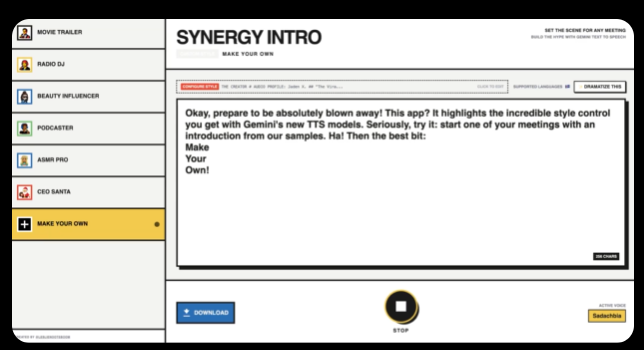
Voice That Feels Alive
The standout feature? Instant emotional switching. Want your audiobook narrator to shift from cheerful to somber? Just click. Need your game character to sound excited during action scenes? Done. This isn't the robotic speech we're used to - it's voice acting quality that adapts on the fly.
Developers are already experimenting with applications from educational content to interactive storytelling. "The difference is night and day," says one beta tester working on language learning apps. "Students actually want to listen now."
Smart Pacing That Follows the Story
Gemini's rhythm adaptation might be its most subtle yet powerful improvement. The system automatically adjusts speed based on content - slowing down for complex explanations, speeding up during exciting passages. Imagine listening to a mystery novel where the pacing actually matches the building tension.
This contextual awareness extends beyond fiction:
- Product tutorials become more engaging
- Marketing videos feel less scripted
- Educational content maintains attention better
Global Conversations Made Easy
The update also solves a persistent challenge in multilingual applications - maintaining consistent character voices across languages. Gemini supports 24 languages while preserving each speaker's unique pitch and style, making natural cross-language dialogues possible for the first time.
Historical reenactments can now feature authentic multilingual conversations without jarring voice changes. Language learners can hear consistent character voices whether they're studying English, French, or Japanese.
Real-World Impact
Early adopters report impressive results:
- Audio platforms see 20% higher subscription rates
- Content studios praise improved immersion
- Operational costs dropped by 20%
The technology is currently available for free testing through Google AI Studio, with full production release expected in early 2025.
What's Next?
Google plans parallel development of two versions:
- Flash: Ultra-low latency (<300ms) for real-time applications like gaming and live interactions
- Pro: Premium quality (48kHz sampling) for studio-grade audio production The company aims to expand into podcasting, virtual influencers, and interactive entertainment as the technology matures.
Key Points:
- Emotional voice switching with one-click tone changes
- Context-aware pacing adapts to content naturally
- Consistent multi-character support across 24 languages
- Currently in free testing; production release Q1 2025
- Early users report 20% better engagement and cost savings