Four Robot Pioneers Leading the Embodied Intelligence Revolution
The Rise of Thinking Robots: Four Companies Leading the Charge
Imagine robots that don't just follow programmed instructions but learn from their environment and make decisions on the fly. That's the promise of embodied intelligence robots, and according to IDC's new report, they're poised to revolutionize multiple industries.
What exactly are these smart machines? Unlike traditional robots confined to repetitive tasks, embodied intelligent robots combine cloud computing, edge reasoning and multimodal perception technologies. This powerful mix allows them to adapt to different scenarios autonomously - whether that's navigating a busy warehouse or inspecting dangerous industrial sites.
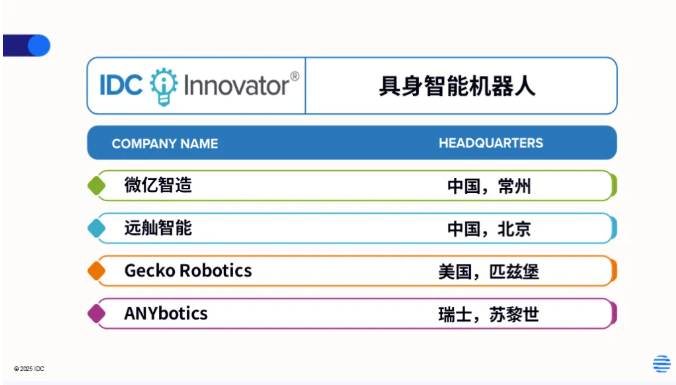
The IDC report highlights four standout innovators pushing boundaries:
Industrial Problem-Solvers
Micro-I is transforming manufacturing floors with robotic systems that perceive their surroundings, learn from experience, and handle complex tasks without constant human oversight. Their technology represents a leap forward in industrial automation.
Logistics Game-Changer
Yuanshan Intelligence developed heavy-duty autonomous vehicles that are reshaping campus logistics. Using proprietary multimodal perception tech, these smart haulers optimize delivery routes in real-time - cutting costs while boosting efficiency.
Infrastructure Guardians
Gecko Robotics takes maintenance where humans can't safely go. Their wall-climbing robots gather critical data in hazardous environments while AI analyzes patterns to predict potential failures before they occur.
Heavy Industry Inspectors
ANYbotics brings four-legged versatility to challenging industrial settings. These robotic inspectors combine advanced sensor arrays with intelligent navigation to automate dangerous inspection work.
"What excites us most," explains Li Junlan, IDC China's Research Manager, "is how these companies aren't just creating better robots - they're reinventing how businesses operate." The common thread? Using intelligent technology to enhance efficiency while reducing risks and operational costs.
The implications are profound. As these technologies mature, we could see:
- Factories where robotic systems self-optimize production lines
- Warehouses where autonomous vehicles coordinate seamlessly
- Infrastructure maintained by robotic teams working round-the-clock
The race is on - and these four innovators currently lead the pack in turning science fiction into business reality.
Key Points:
- Market potential: Embodied intelligence robots projected to claim >30% market share by 2030
- Industry impact: Solutions already transforming logistics, manufacturing and infrastructure sectors
- Smart advantage: AI-powered adaptability reduces costs while improving safety and efficiency