

dots.ocr Launches as Lightweight Multilingual Document Parser
dots.ocr Emerges as Efficient Multilingual Document Parser
A new contender has entered the competitive field of AI-powered document processing. dots.ocr, a lightweight vision-language model with just 1.7B parameters, is making waves with its efficient multilingual parsing capabilities that rival larger models like Doubao and Gemini.
Lightweight Architecture, Heavyweight Performance
The model's compact 1.7B parameter design enables remarkably fast processing - capable of analyzing a PDF page in mere seconds. Despite its smaller size, dots.ocr achieves state-of-the-art (SOTA) performance in text extraction, table parsing, and maintaining document reading order. 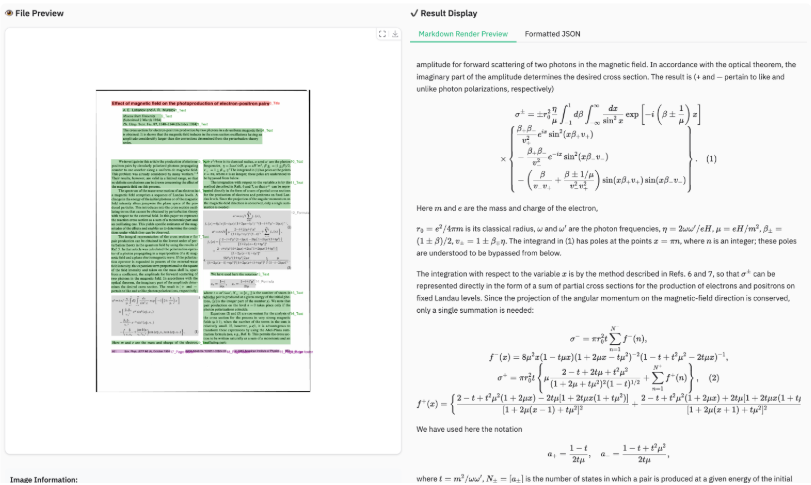
"What sets dots.ocr apart is its ability to match the formula recognition accuracy of much larger models while maintaining significantly faster processing speeds," noted an industry analyst familiar with the technology.
Global Language Support
dots.ocr supports an impressive 100 languages, including Chinese and English, with particular strengths in low-resource language processing. The model handles mixed-language documents effectively, providing stable parsing results across diverse linguistic contexts.
The unified architecture allows for simultaneous text recognition and layout analysis without the complexity of traditional multi-model pipelines that typically handle these tasks separately.
Advanced Layout Understanding
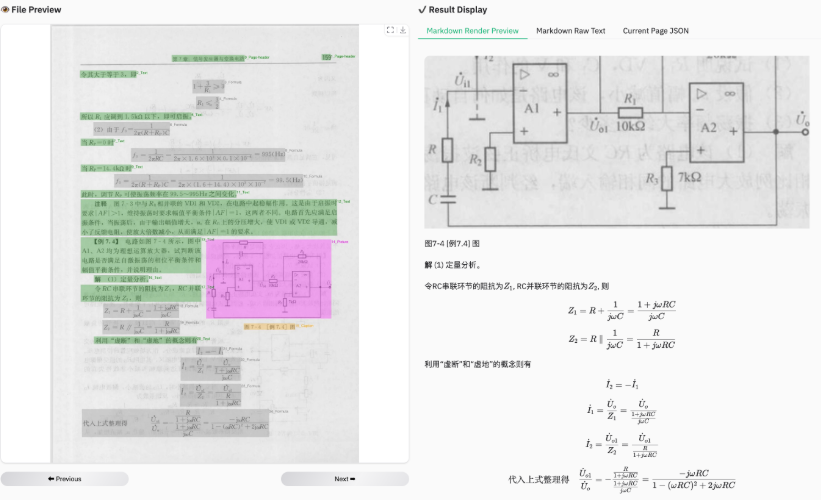
The model demonstrates exceptional layout detection capabilities, accurately identifying:
- Headers and paragraphs
- Images and graphical elements
- Table structures and positions
- Mathematical formulas (output in LaTeX format)
Specialized Parsing Capabilities
dots.ocr particularly shines in:
- Table extraction: Maintaining cell structure and content relationships
- Formula recognition: Preserving complex mathematical notation for academic use
- Reading order preservation: Critical for maintaining document logic flow
While excelling in most scenarios, the developers acknowledge current limitations with highly complex tables and certain special character sequences.
Future Development Roadmap
The development team plans to:
- Enhance complex table and formula parsing
- Expand image content analysis capabilities
- Improve handling of documents with unusual character patterns
- Optimize for high-throughput enterprise applications
Key Points:
- Efficient processing: Seconds-per-page speed at 1.7B parameters
- Multilingual mastery: Supports 100 languages including low-resource options
- Unified architecture: Combines OCR with layout analysis in single model
- Academic applications: Excellent LaTeX output for formulas
- Current limitations: Challenges with some complex layouts and special characters