
DeepSeek-R1 AI Breakthrough Featured on Nature Cover

DeepSeek-R1 AI Model Achieves Breakthrough in Reasoning Capabilities

A landmark study on the DeepSeek-R1 artificial intelligence system has been featured on the cover of the prestigious journal Nature, highlighting significant advancements in AI reasoning capabilities. The research, led by Professor Liang Wenfeng's team, demonstrates how reinforcement learning can dramatically improve problem-solving skills in large language models (LLMs).
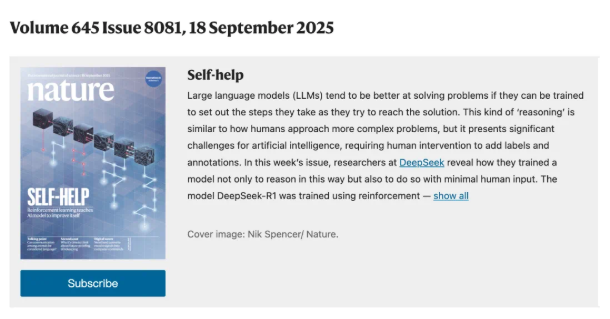
Image

Revolutionizing AI Problem-Solving

The Nature cover story emphasizes that AI systems capable of step-by-step planning often achieve superior solutions - a capability that mirrors human cognitive processes but has remained challenging to replicate in machines. The DeepSeek-R1 model represents a major leap forward in this domain.

"Large models that can plan steps to solve problems obtain better solutions," noted the Nature editorial team. "This research demonstrates how to train models with reasoning abilities while minimizing human intervention."

Reinforcement Learning Approach

The breakthrough centers on an innovative reinforcement learning strategy:

  • The model receives positive reinforcement for correctly solving mathematical problems
  • It faces penalties for incorrect answers
  • This feedback loop teaches the system to:
    • Reason through problems systematically
    • Verify solutions before responding
    • Continuously improve performance

The approach has shown particular effectiveness in programming tasks and scientific research applications, where logical reasoning is paramount.

Peer-Reviewed Milestone

DeepSeek-R1 holds the distinction of being the first language model to undergo peer review by a top-tier academic journal. This validation process marks a critical step in establishing scientific credibility for AI systems.

Lewis Tunstall, an engineer at Hugging Face, commented: "This sets an important precedent for our field. It underscores the need for rigorous standards, especially when evaluating potential risks associated with advanced AI systems."

Commitment to Transparency

The research team emphasized transparency throughout their work:

  • Detailed documentation of training data sources
  • Comprehensive safety protocols
  • Avoidance of anthropomorphic descriptions
  • Clear explanations of methodology

This open approach has earned widespread praise from peers and helps build public trust in rapidly evolving AI technologies.

Key Points:

🌟 Enhanced Reasoning: DeepSeek-R1 demonstrates dramatically improved problem-solving through reinforcement learning techniques
📝 Peer Review First: Represents the first LLM study validated by a top academic journal's peer review process
🔍 Transparent Development: Research methodology emphasizes openness and safety considerations

Enjoyed this article?

Subscribe to our newsletter for the latest AI news, product reviews, and project recommendations delivered to your inbox weekly.

Weekly digestFree foreverUnsubscribe anytime

Related Articles

MiniMax posts $79M revenue in first year as public company
News

MiniMax posts $79M revenue in first year as public company

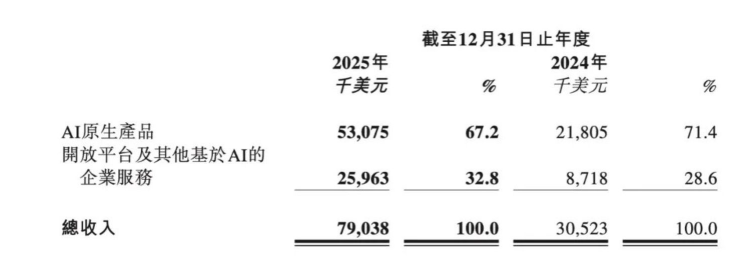
Chinese AI firm MiniMax has reported explosive growth in its first annual report since going public, with revenue jumping 159% to $79 million. While the company posted massive paper losses due to valuation changes, its core AI platform shows promising traction globally - especially with its cost-effective M2.5 model that's gaining ground against competitors. However, copyright lawsuits from Hollywood studios loom as potential risks for this rising AI star.

March 3, 2026
Artificial IntelligenceCorporate EarningsTech Startups
News

Claude's Turbulent Week: Server Crash Meets Political Firestorm

Anthropic's AI assistant Claude faced a perfect storm last week - servers buckling under unprecedented demand while caught in a political crossfire. The platform saw user numbers skyrocket just as former President Trump banned federal use, calling the company 'too woke.' Meanwhile, leaked documents reveal the military continues relying on Claude for sensitive operations, creating an ethical dilemma that pits national security against AI principles.

March 3, 2026
Artificial IntelligenceTech PolicyEthical AI
News

China's AI Models Surpass U.S. in Global Usage, Signaling Tech Shift

Chinese AI models have overtaken their U.S. counterparts in global API calls for the first time, capturing nearly 86% of usage on OpenRouter's platform. This milestone reflects China's growing influence in practical AI applications and cost-effective solutions that attract international developers. While analysts highlight promising sectors like AI chips and cloud computing, they also caution about market risks including data accuracy and competition.

March 3, 2026
Artificial IntelligenceTech CompetitionEmerging Markets
News

Hyundai Bets Big on AI and Robots with $6.1 Billion Korean Hub

Hyundai Motor Group is making a massive $6.1 billion push into AI and robotics with a new innovation hub in South Korea. The project will feature one of the world's largest AI data centers, a robot factory churning out 30,000 units annually, and cutting-edge hydrogen energy facilities. This bold move signals Hyundai's transformation from carmaker to future mobility leader, while creating thousands of local jobs and positioning Korea at the forefront of advanced manufacturing.

March 3, 2026
Artificial IntelligenceAdvanced ManufacturingClean Energy
News

Alibaba's Qwen AI Models Dominate Global Rankings While Lunar New Year Usage Soars

Alibaba's Qwen series of AI models has taken the open-source world by storm, securing the top four spots on Hugging Face's global rankings. Meanwhile, consumer adoption skyrocketed during Lunar New Year celebrations, with daily active users jumping nearly tenfold. The models' ability to handle complex tasks through simple voice commands suggests AI assistants are moving beyond novelty status into practical everyday use.

March 2, 2026
Artificial IntelligenceAlibaba CloudOpen Source
A $70 Million Childhood Purchase: How AI.com Became the Ultimate Domain Jackpot
News

A $70 Million Childhood Purchase: How AI.com Became the Ultimate Domain Jackpot

The coveted AI.com domain just sold for a staggering $70 million, completing an extraordinary 32-year journey from a $100 childhood purchase to one of tech's most valuable digital assets. Malaysian investor Arsyan Ismail bought the domain in 1993 simply because it matched his initials, never imagining it would become ground zero for the AI revolution. This record-breaking sale underscores how premium domains have become strategic assets in the AI gold rush.

March 2, 2026
Domain InvestingArtificial IntelligenceTech History