Cursor 2.0 Launches with Multi-Agent Coding Revolution
Cursor 2.0 Introduces Multi-Agent Coding Platform
Cursor, the AI-powered code editor, has launched version 2.0 with groundbreaking features that redefine developer workflows. The update shifts from single-completion tools to a multi-agent collaborative platform, addressing delays and bottlenecks in complex projects.
The Composer Model: Engineered for Efficiency
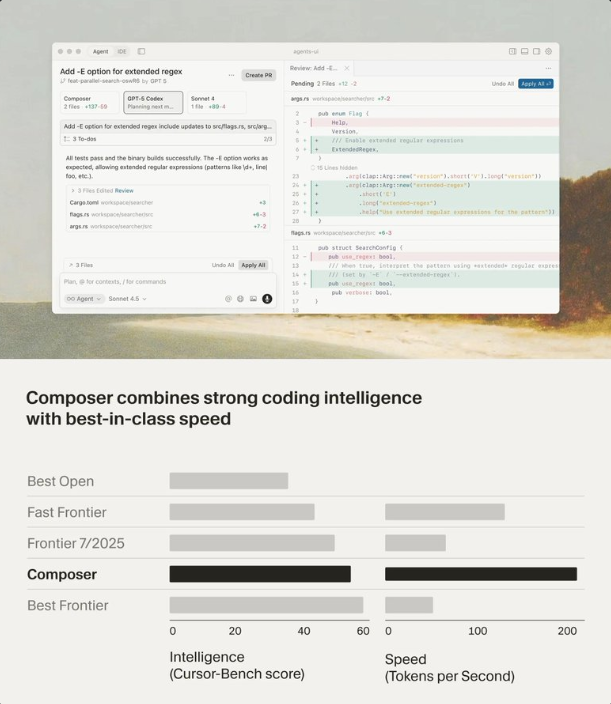
The centerpiece of Cursor 2.0 is Composer, its first self-developed coding model. Unlike previous versions relying on third-party models like GPT or Claude, Composer uses:
- Reinforcement learning (RL) + mixture of experts (MoE) architecture
- MXFP8 quantization training
The result? 4x faster response speeds while maintaining high accuracy, with most interactions completing within 30 seconds. Composer also features a semantic search engine at the codebase level, preventing context "forgetting" during complex tasks.
Parallel AI Agents: A New Development Paradigm
Cursor 2.0 introduces eight independent AI agents that can operate simultaneously:
- Architecture planning (GPT-4)
- Core algorithm writing (Claude Sonnet)
- Performance optimization (Composer)
- Developer-managed final merge
This "multi-model + multi-task" approach eliminates single-threaded limitations, particularly beneficial for enterprise projects.
Integrated Development Workflow
The update deeply integrates development processes:
- AI code review: Automatic change highlighting with intent explanations
- Native browser: Real-time DOM reading for front-end tests
- Sandbox terminal: Secure shell command execution (macOS)
- Voice input + context-aware: Automatic error log collection
Strategic Shift: From Tool to Ecosystem
Cursor transitions from third-party model integration to a self-developed model + platform ecosystem. While competitors focus on incremental improvements, Cursor bets on "multi-agent collaboration" as the next-generation paradigm.
Early adopters report rapid adaptation to the new interface, with Composer's speed and agent flexibility quickly winning developer trust.
Key Points:
- Composer model delivers 4x faster performance
- Eight parallel AI agents enable complex project handling
- Full workflow integration reduces context switching
- Strategic move establishes technological moat in AI coding