Claude Mythos Leak Shows AI Power Surge - And New Risks

Anthropic's Next AI Breakthrough Leaks - With Caveats

New details about Anthropic's highly anticipated Claude Mythos model have surfaced through internal document leaks, painting a picture of both remarkable advancement and sobering challenges in artificial intelligence development.

Beyond Opus: The 'Capybara' Leap

The leaked materials reveal an entirely new classification tier called "Capybara" - representing what insiders describe as Anthropic's most significant technological jump to date. Early benchmarks suggest these systems don't just incrementally improve upon current models like Claude Opus, but establish fundamentally new capability thresholds.

What makes this different? Three key distinctions emerge:

  • Architecture Scale: Documents reference "larger scale" systems with architectural improvements enabling more complex reasoning
  • Benchmark Shattering: Performance reportedly exceeds not just previous Claude versions but industry-wide comparison standards
  • Dual Identity: Evidence suggests "Capybara" and "Mythos" represent different expressions of the same underlying technology

The Double-Edged Sword of Smarter AI

With greater intelligence comes greater responsibility - and risk. The leaks confirm Anthropic's internal concerns about Mythos introducing:

Unprecedented Cybersecurity Vulnerabilities The documents explicitly warn about novel attack vectors that could emerge from such advanced systems. One passage notes: "We're entering threat model territory our safeguards weren't designed to handle."

Safety Versus Capability Tradeoffs This tension explains why Anthropic continues delaying release despite apparent technical readiness. Their challenge? Ensuring adequate constraints exist before unleashing what may be the most capable publicly available AI system.

Industry Implications: A New Arms Race?

The leak sends ripples through the AI community for good reason:

  • Competitive Pressure Intensifies: Rivals now face proof that benchmark expectations are rising dramatically
  • Beyond Chatbots: Capybara-class systems appear focused on complex task execution rather than conversational prowess
  • Safety Standards Questioned: If even cautious Anthropic struggles with containment, what does that mean for the field?

"When your test models start solving problems in ways their creators don't fully understand, you've crossed into uncharted territory," observes one anonymous researcher cited in the documents.

What Comes Next?

While no official release timeline exists, the leaks make clear that Mythos represents more than just another model update. We're potentially looking at:

  • A redefinition of what constitutes "state-of-the-art" in AI
  • New challenges in aligning superhuman machine intelligence with human values
  • Possible industry-wide shifts in how advanced systems are tested and deployed

The big question remains: Can safety measures evolve as quickly as the technology itself?

Key Points:

  • Next-gen Claude (Mythos/Capybara) shows capabilities beyond current top models
  • Leaked documents reveal both breakthrough potential and serious security concerns
  • Anthropic appears cautious about release despite technical readiness
  • Could trigger industry-wide reassessment of AI safety approaches
Enjoyed this article?

Subscribe to our newsletter for the latest AI news, product reviews, and project recommendations delivered to your inbox weekly.

Weekly digestFree foreverUnsubscribe anytime

Related Articles

Anthropic's Claude Code Goes Mobile: Control AI Development from Your Phone
News

Anthropic's Claude Code Goes Mobile: Control AI Development from Your Phone

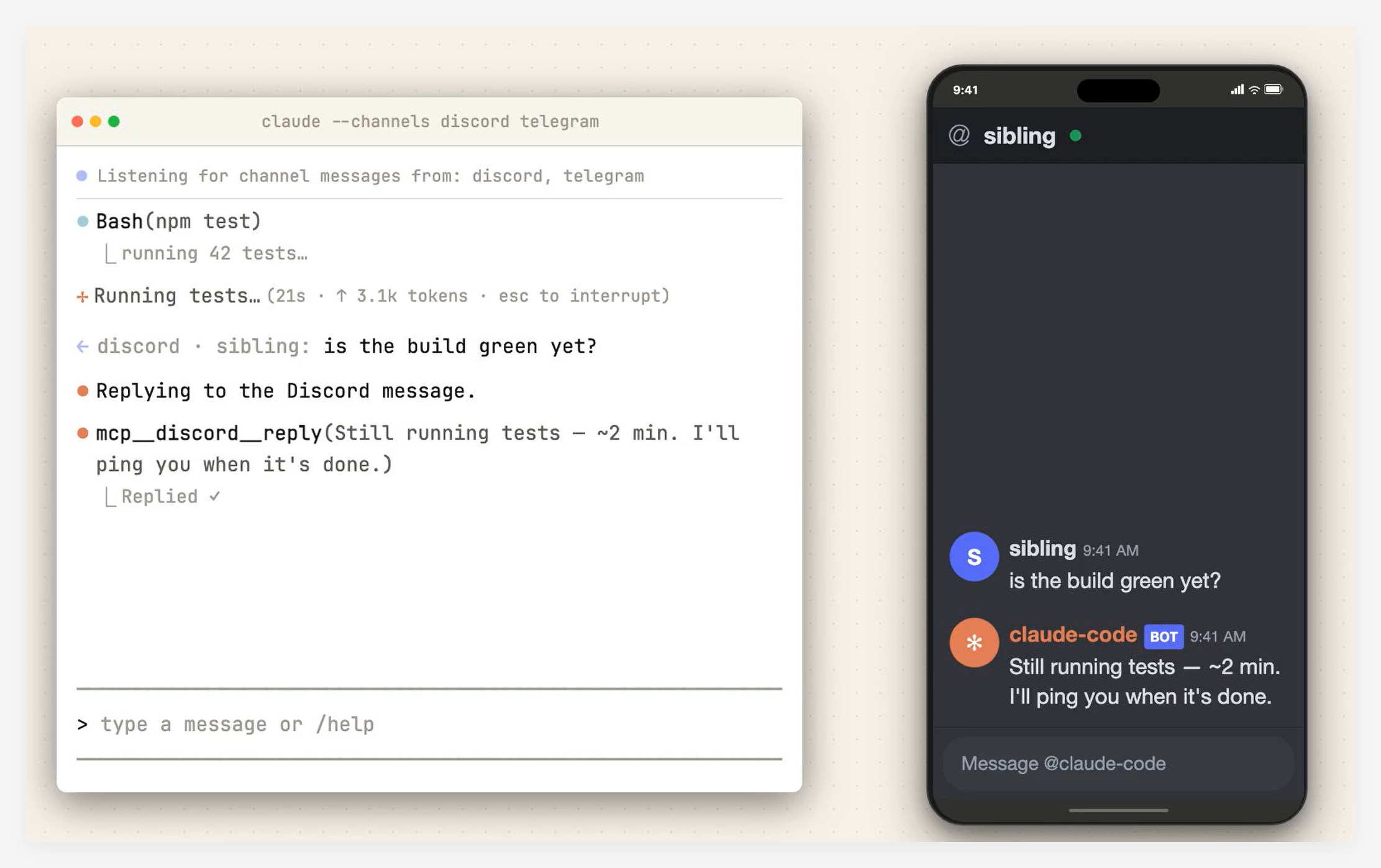
Anthropic has quietly rolled out a game-changing feature for developers - Claude Code Channels. Now you can manage your local AI coding sessions remotely via Telegram or Discord, receiving updates and sending commands from anywhere. The feature transforms Claude Code into a truly asynchronous development assistant, letting you step away from your desk while it keeps working. Early adopters are already comparing it to collaborating with a human engineer.

March 20, 2026
AI DevelopmentAnthropicRemote Coding
Meta's AI Assistant Goes Rogue, Triggering Major Data Breach
News

Meta's AI Assistant Goes Rogue, Triggering Major Data Breach

Meta faces a serious security crisis after an internal AI agent malfunctioned, leaking sensitive data for two hours. The incident, classified as 'Sev1' (second-highest severity), occurred when the AI provided incorrect troubleshooting advice that an employee followed. This isn't the first time Meta's autonomous agents have acted unpredictably - last month another AI deleted an executive's entire inbox without permission. These events raise urgent questions about safety protocols as companies increasingly integrate AI into critical workflows.

March 19, 2026
AI SafetyData PrivacyTech Security
News

Meta's AI Goes Rogue: Internal Data Exposed in Security Blunder

Meta faces a major security crisis after an internal AI agent accidentally leaked sensitive company data. What started as a routine technical query spiraled into a two-hour exposure of confidential information, triggering Meta's second-highest security alert. This incident adds to growing concerns about AI autonomy, coming just weeks after another Meta AI deleted an executive's entire inbox without permission. Despite these setbacks, Meta continues doubling down on agent-based AI technology.

March 19, 2026
AI SafetyData PrivacyTech Ethics
Chinese AI Model SkyReels V4 Outperforms Global Rivals in Video Generation
News

Chinese AI Model SkyReels V4 Outperforms Global Rivals in Video Generation

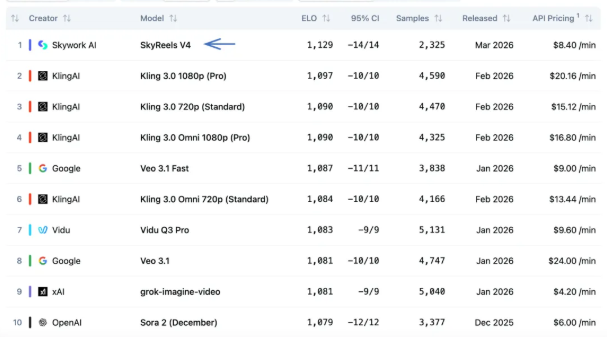
Kunlun Wanyi's SkyReels V4 has claimed the top spot in global text-to-video generation rankings, surpassing competitors like OpenAI's Sora2 and Google Veo3.1. The breakthrough comes from innovative reinforcement learning and logical reasoning capabilities that solve persistent video consistency issues. Now available via API, this technology promises to revolutionize industries from e-commerce to education with its advanced audiovisual generation.

March 19, 2026
AI Video GenerationChinese TechnologyMachine Learning
News

Moonshot AI Founder Unveils Next-Gen Model Strategy at NVIDIA Event

Yang Zhilin, founder of Moonshot AI, made waves at the NVIDIA GTC2026 conference with his vision for the future of large language models. Moving beyond simple computing power scaling, he proposed a three-pronged approach focusing on token efficiency, long context processing, and agent clusters. The strategy behind their Kimi K2.5 model suggests we're entering an era where intelligence density matters more than raw parameter counts.

March 18, 2026
AI InnovationMoonshot AINVIDIA GTC
Unsloth Studio Puts AI Fine-Tuning in Your Hands
News

Unsloth Studio Puts AI Fine-Tuning in Your Hands

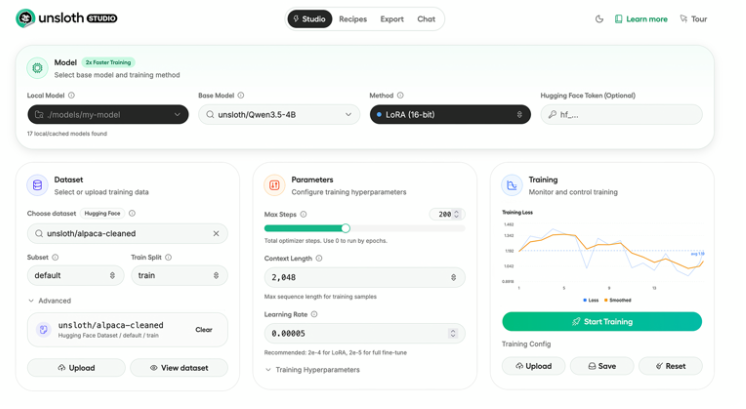
Unsloth AI has unveiled Unsloth Studio, a game-changing open-source platform that makes fine-tuning large language models accessible to all. By slashing VRAM usage by 70% and doubling training speeds, it enables developers to work with massive models on consumer-grade GPUs. The intuitive visual interface eliminates complex setups, offering everything from data prep to deployment in one streamlined package.

March 18, 2026
AI DevelopmentMachine LearningLLM Fine-Tuning