

ByteDance's Lance 3B: The Compact AI Powerhouse That Sees and Creates
ByteDance Unveils Revolutionary Multimodal AI Model
In an industry obsessed with ever-larger models, ByteDance Research has taken a different approach with its newly open-sourced Lance 3B. This compact yet powerful model packs both vision and language capabilities into a surprisingly efficient package, challenging the notion that bigger always means better in AI.
Why Lance Stands Out
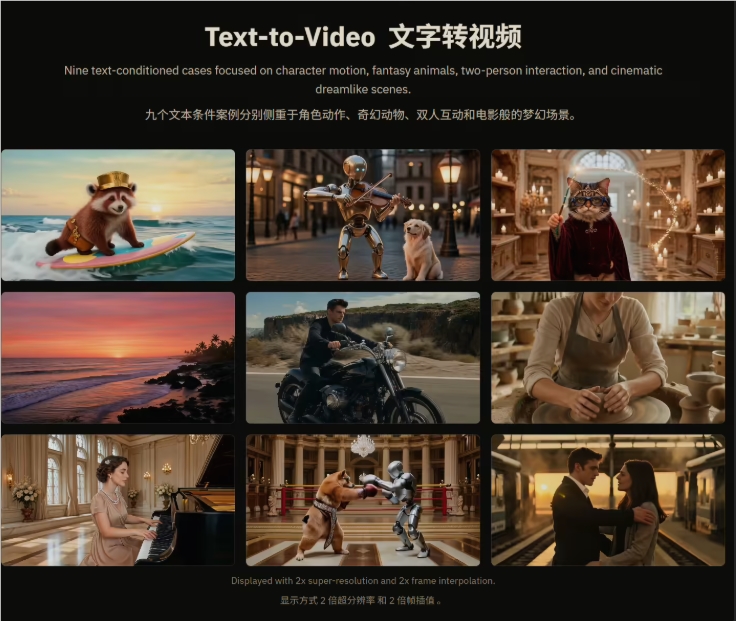
While competitors build trillion-parameter behemoths or cobble together separate components, Lance achieves something remarkable: it combines image/video understanding, generation, and cross-modal editing in a single system with just 3 billion activation parameters.
"Most models either understand content or generate it - Lance does both exceptionally well," explains an industry analyst. "It's like having a professional cinematographer and editor rolled into one digital assistant."
Key advantages include:
- True native unification rather than stitched-together components
- Seamless handling of text-to-image, text-to-video, and multimodal editing
- Open-source availability under Apache 2.0 license
- Surprisingly modest hardware requirements (128 A100 GPUs)
The Secret Sauce: Smart Architecture
Traditional AI systems struggle with a fundamental conflict: understanding tasks need to filter out noise while generation tasks require rich detail. Lance solves this through an innovative "shared context + parallel capability decoupling" approach.
The model first converts all inputs into a unified "interleaved sequence" before processing them through:
- A Dual-Stream MoE Architecture where separate expert networks handle understanding and generation tasks
- MaPE Encoding - a novel system that prevents confusion between different media types while preserving their unique characteristics
Training That Packs a Punch
ByteDance's team achieved impressive results through four carefully designed training phases:
- Foundation Building: 1.5 trillion tokens of image-text and video-text pairs
- Skill Expansion: 300 billion tokens focusing on editing and multi-task synergy
- Fine-Tuning: 72 billion tokens to improve instruction following
- Refinement: Reinforcement learning to tackle common AI pitfalls like text rendering errors
"What's remarkable is they did this without the compute budgets of tech giants," notes an AI researcher. "Lance proves you don't need thousands of GPUs to build something groundbreaking."
Performance That Belies Its Size
Benchmark results show Lance punching well above its weight:
- Video Generation (VBench): 85.11 points, beating specialized models
- Image Generation (GenEval): 0.90 score, among open-source leaders
- Video Understanding (MVBench): 62.0 points, outperforming larger dedicated models
Industry Impact
Lance could dramatically lower the barriers for:
- AI film production: Seamlessly understanding scripts while generating consistent visuals
- Interactive media: Real-time content creation and modification
- Agent systems: More fluid collaboration between AI assistants
"Previously, you needed multiple models running in parallel," explains a developer. "Lance gives you that same functionality in one package - it's like going from a film crew to a one-person production studio."
Key Takeaways
- ByteDance's Lance 3B combines vision and language understanding/generation in a single efficient model
- Innovative architecture solves the traditional conflict between understanding and generation tasks
- Achieves top-tier performance with just 3 billion parameters
- Open-source availability could democratize advanced AI applications
- Significant potential for film production, interactive media, and AI agent development