
Blok Uses AI to Simulate User Behavior for Better Apps

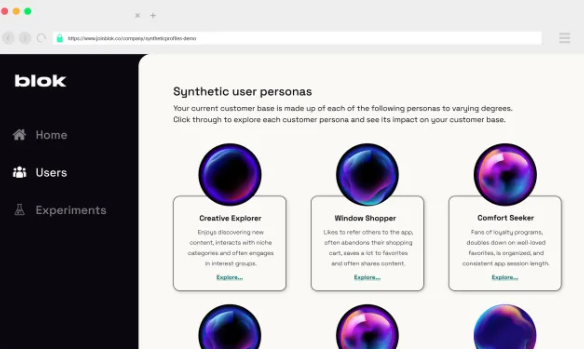
Blok Revolutionizes App Testing with AI-Driven User Simulations

In the fast-paced tech industry, developers grapple with the challenge of efficiently testing app features to enhance user experience. Blok, a rising startup, has stepped in with an innovative solution: AI-powered user behavior simulation. Founded by Tom Chalmers and Olivia Higgs in 2024, Blok has already secured $7.5 million in funding from prominent investors like MaC Venture Capital, Discord, Google, and Meta employees.

The Vision Behind Blok

Blok’s founders, seasoned entrepreneurs with backgrounds in travel and learning platforms, identified a critical gap in traditional testing tools. "Most tools are reactive," explains Marlon Nichols of MaC Venture Capital. "Blok offers a predictive testing solution, allowing teams to anticipate user behavior before writing code." This forward-thinking approach positions Blok as a disruptor in the product development space.
Image

Addressing Modern Testing Challenges

As user interfaces grow more complex, the demand for accurate testing has skyrocketed. Higgs notes that Blok’s team interviewed over 100 engineers during development to understand pain points. "With diverse user interactions, developers must ensure new visual elements don’t complicate usability," she says.

How Blok Works

Blok’s workflow is streamlined:

  1. Upload event logs and Figma designs.
  2. Submit experiment details.
  3. Let Blok’s AI run multiple simulations.
  4. Receive actionable insights on feature usage and improvements.

This process ensures teams gather valuable feedback before launching features—reducing costly post-release fixes.

Target Markets and Future Goals

Currently in beta, Blok focuses on finance and healthcare, where testing precision is paramount. The startup aims to hit millions in revenue this year while refining its service model for broader adoption.

Key Points:

  • AI-driven simulations predict user behavior pre-development.
  • Raised $7.5M from top-tier investors.
  • Targets high-stakes industries like finance and healthcare.
  • Simplifies testing with Figma integration and automated insights.

Enjoyed this article?

Subscribe to our newsletter for the latest AI news, product reviews, and project recommendations delivered to your inbox weekly.

Weekly digestFree foreverUnsubscribe anytime

Related Articles

News

Microsoft flips the switch on $3.3B AI powerhouse ahead of schedule

Microsoft has launched its massive Fairwater AI data center in Wisconsin earlier than planned, marking a major leap in artificial intelligence infrastructure. The $3.3 billion facility houses hundreds of thousands of NVIDIA's cutting-edge GB200 superchips, delivering computing power that dwarfs today's fastest supercomputers. This technological colossus spans 127 hectares and features innovative cooling systems to handle the intense processing demands of next-gen AI models.

April 20, 2026
MicrosoftAI InfrastructureData Centers
News

iFLYTEK's AstronClaw upgrade aims to bring AI out of your screen and into the real world

Chinese tech company iFLYTEK has unveiled a significant upgrade to its AstronClaw AI system, introducing nine new products and a novel 'software-hardware integrated' AI Agent architecture. The upgrade transforms AI assistants from mere conversational partners into active participants in physical tasks, with applications ranging from office productivity to wearable tech. A standout product is the lightweight GlassClaw AI glasses, which combine voice and visual recognition to interact with environments intelligently.

April 17, 2026
AIiFLYTEKwearable technology
News

iFLYTEK's AM50 Pro: The AI-Powered Mouse That Does More Than Just Click

iFLYTEK has unveiled its AM50 Pro smart mouse, blending sleek design with cutting-edge AI capabilities. Priced at 498 yuan, this lightweight gadget comes in three colors and offers multiple connectivity options. What sets it apart? Built-in access to major AI models like Qwen Plus and iFLYTEK Spark, activated with a dedicated button. With impressive specs including a 70-million-click lifespan and 4KHz reporting rate, it's designed for both office warriors and gaming enthusiasts looking to boost productivity with AI at their fingertips.

April 16, 2026
iFLYTEKAI GadgetsSmart Mouse
News

Xiaohongshu Shakes Up AI World by Open-Sourcing Its Relax Training Engine

In a surprising move, lifestyle platform Xiaohongshu has open-sourced its AI training engine called Relax, designed for multi-modal scenarios. This sophisticated tool handles text, images, audio and video through innovative parallel processing. The unexpected contribution from a non-traditional AI player signals the company's serious ambitions in artificial intelligence development and its desire to build influence in the tech community.

April 15, 2026
AIOpen SourceMachine Learning
News

NVIDIA Unveils Open-Source Quantum AI Breakthrough, Sparking Market Rally

NVIDIA has made waves in the tech world by releasing Ising, the first open-source quantum AI model series. This groundbreaking development addresses critical challenges in quantum computing, offering researchers tools to build more reliable quantum processors. The announcement sent quantum tech stocks soaring, with some Chinese companies seeing massive fund inflows. The Ising models - one for calibration, another for error correction - promise speeds 2.5 times faster than current standards with a 300% accuracy boost.

April 15, 2026
Quantum ComputingArtificial IntelligenceNVIDIA
News

Zuckerberg's Digital Doppelgänger: Inside Meta's AI Clone Project

Meta is developing an eerily realistic AI version of Mark Zuckerberg that company employees will be able to converse with in real time. The digital CEO clone, currently in early testing phases, learns from Zuckerberg's speeches, mannerisms, and strategic views. This ambitious project comes as Meta pours billions into AI development, recently launching tools like MuseSpark while facing concerns about digital ethics.

April 13, 2026
Artificial IntelligenceMetaDigital Humans