

Baichuan Unveils Medical AI Model M2Plus
Baichuan Launches Evidence-Based Medical AI Model
Beijing, October 22, 2025 — Baichuan Technology has officially introduced Baichuan-M2Plus, a groundbreaking medical large language model that company executives describe as "a doctor's version of ChatGPT." The new system represents a significant advancement in clinical decision support tools, specifically engineered to reduce diagnostic errors through structured evidence-based reasoning.
Technical Advancements
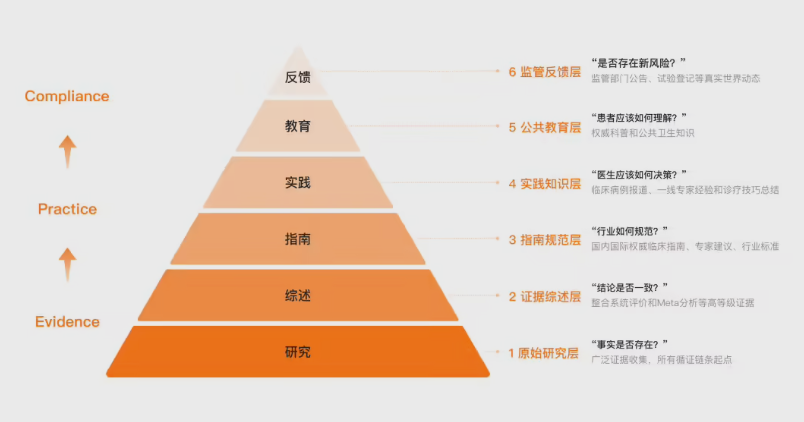
The model builds upon Baichuan's open-source M2 architecture released last August, incorporating what developers term a "six-source evidence-based" framework. This system integrates:
- Original clinical studies
- Evidence reviews
- Current practice guidelines
- Practical clinical knowledge
- Public health education materials
- Regulatory information
Performance Metrics
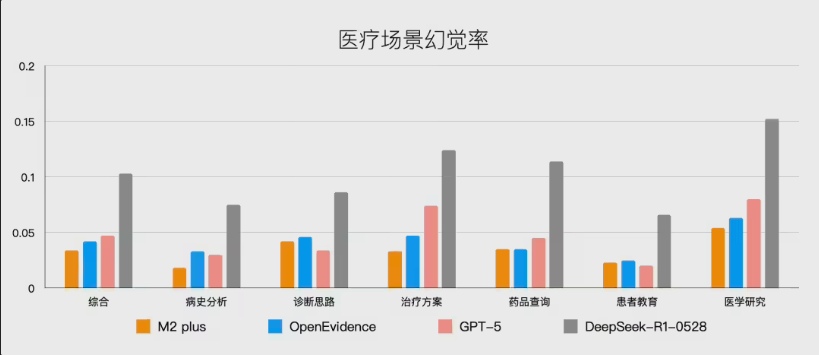
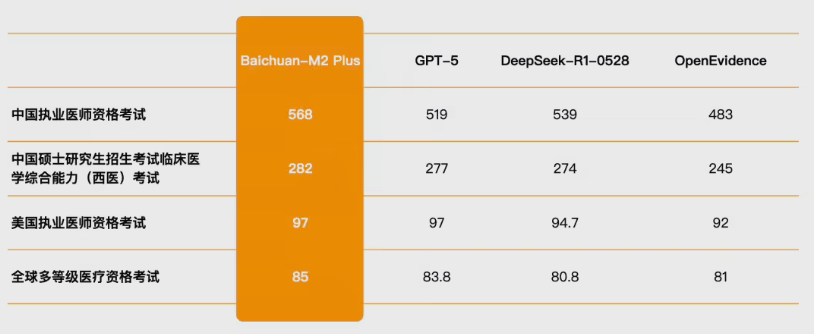
In benchmark testing against the United States Medical Licensing Examination (USMLE), M2Plus achieved a remarkable 97% accuracy score. Comparative analyses show the model outperforms competing systems like OpenEvidence in:
- Diagnostic precision (+18%)
- Citation accuracy (+32%)
- Hallucination reduction (-89%)
The system employs PICO framework (Population, Intervention, Comparison, Outcome) methodology to structure medical queries before database matching—a technique that developers claim eliminates semantic misinterpretations common in conventional models.
Clinical Implementation
The company emphasizes M2Plus is designed as a decision support tool, not a replacement for physician judgment. Early adopters report:
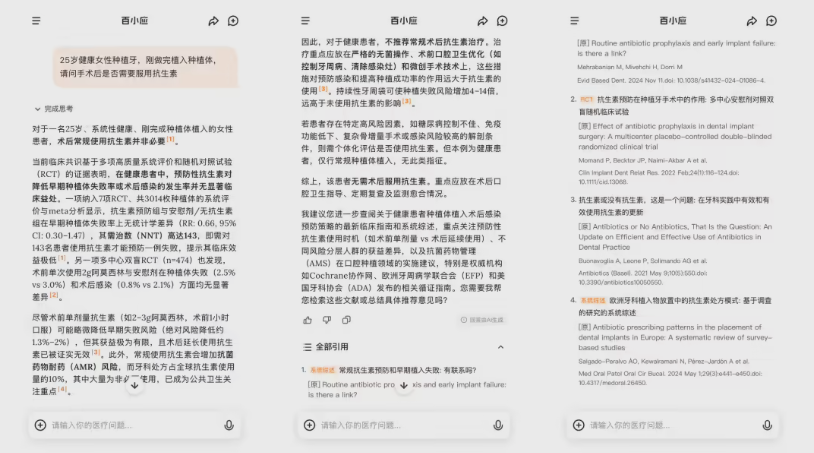
"The evidence trail gives us confidence in the recommendations—we can see exactly which studies or guidelines inform each suggestion," noted Dr. Li Wen of Peking Union Medical College Hospital.
The model's training incorporates over:
- 4 million peer-reviewed articles
- 12,000 clinical guidelines
- Regulatory documents from 38 jurisdictions
 ## Key Points
 - Evidence-Based Architecture: Six-source verification system reduces diagnostic errors
- Clinical Validation: Scores 97% on USMLE benchmarks
- Transparent Sourcing: All recommendations include traceable references
- Semantic Processing: PICO framework enhances query understanding
- Non-Replacement Model: Designed strictly as physician decision support