

Alibaba's MAI-UI Outshines Rivals in Smart GUI Technology
Alibaba's MAI-UI Sets New Standard for GUI Intelligence
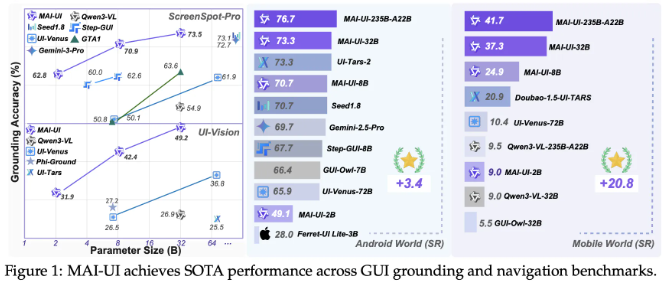
In a significant leap for human-computer interaction, Alibaba's Tongyi Lab has introduced MAI-UI, a family of intelligent agents that are changing how we interact with graphical interfaces. Unlike traditional systems, these agents don't just follow commands—they understand context, ask clarifying questions, and continuously improve their performance.
How MAI-UI Works
Built on the Qwen3VL framework, MAI-UI comes in four model sizes (2B to 235B parameters) capable of processing both natural language instructions and UI screenshots. Imagine telling your phone 'book me a table for two at an Italian restaurant' and watching as the agent navigates reservation apps on its own—clicking buttons, entering text, and even handling unexpected pop-ups.
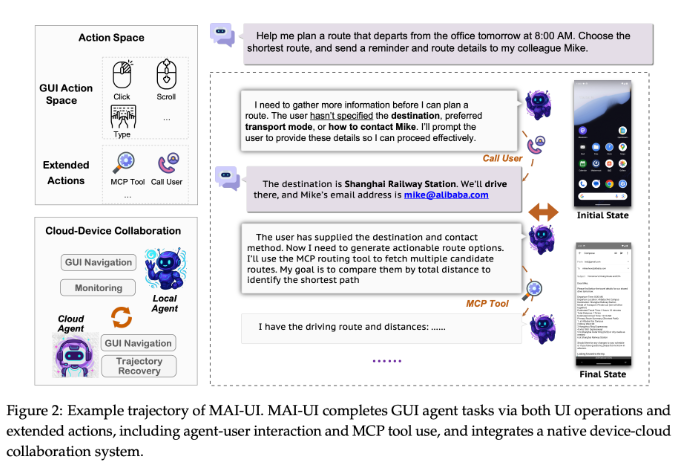
What sets MAI-UI apart is its MCP tool integration, allowing seamless switching between direct GUI manipulation and API-level operations. When faced with ambiguous requests like 'find me something fun to do tonight,' the agent can actually ask follow-up questions before taking action.
Learning While Doing
The system's secret weapon? A self-improving pipeline combining:
- Seed tasks from manuals and public data
- Human oversight from annotators
- Online reinforcement learning
This approach helped MAI-UI achieve remarkable scores: 41.7% success rate on MobileWorld benchmarks and an impressive 76.7% on AndroidWorld tests—outperforming all comparable systems.
Why This Matters
For everyday users, this technology means:
- More intuitive app interactions
- Fewer frustrating dead-ends in complex workflows
- Devices that truly understand user intent rather than just following scripts
The implications extend beyond consumer convenience—enterprise applications could see dramatic efficiency gains in areas like customer service automation and workflow management.
The team has made the project available on GitHub, inviting developers to explore its potential.
Key Points:
- Next-gen interaction: MAI-UI blends GUI navigation with conversational AI for more natural device control
- Android mastery: The system performs real-time operations including clicks, swipes, and text entry
- Benchmark leader: Outperforms competitors by significant margins in standardized testing
- Continuous learning: Reinforcement learning allows ongoing performance improvements