360 Nano AI Advances to Multi-Agent Swarm, Reaches L4 Intelligence
360 Nano AI Achieves Breakthrough with Multi-Agent Swarm Technology
Beijing, August 2, 2025 — 360 Group has announced a major upgrade to its Nano AI platform, now operating as the world’s first L4-level multi-agent swarm system. This advancement shifts AI capabilities from individual operations to group collaboration, marking a significant leap in artificial intelligence efficiency.
How the Swarm System Works
The new framework enables over 50,000 L3-level agents—each specialized in deep reasoning for vertical fields—to dynamically form teams, layer tasks, and execute complex workflows without interruption for up to two hours. The system has processed tasks consuming over 20 million tokens, addressing critical challenges in traditional multi-agent collaboration:
- Task allocation errors
- Parameter transmission inefficiencies
- Context management bottlenecks
The result is a collaborative effect where performance scales exponentially, far surpassing traditional one-to-one AI models.
Real-World Applications
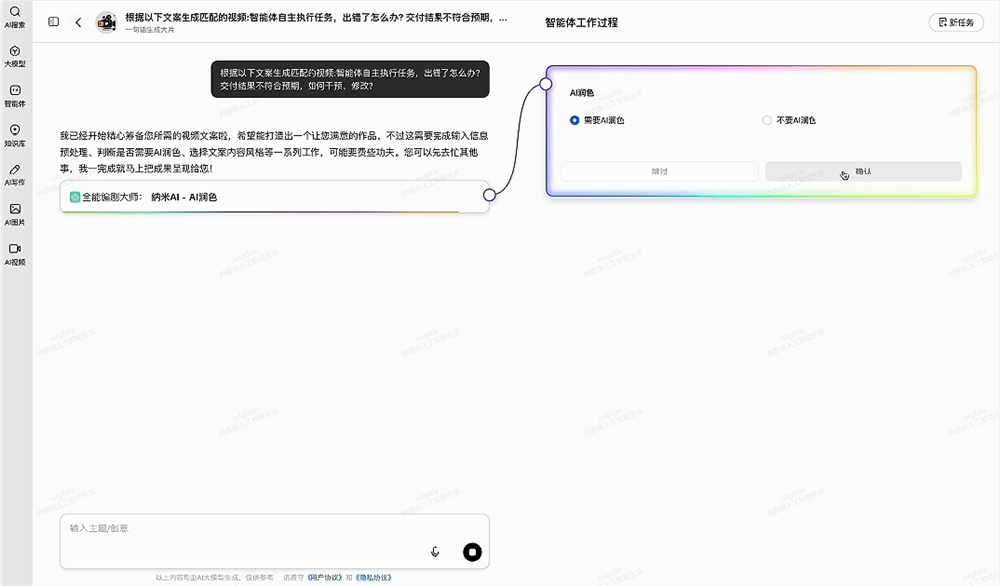
More than 10 scenario-based swarms are already operational, including:
- Video production: Generate movie-grade films in 20 minutes via natural language commands.
- E-commerce live streaming: Create multilingual promotional videos with a single click.
- Content creation: Automate trend monitoring and viral content generation for self-media platforms.
- Industry research: Accelerate data analysis and reporting.
- Travel planning: Optimize itineraries using real-time data aggregation.
Human-Centric Design
360 Group emphasizes that the L4 swarm is designed to augment human creativity, not replace it. The system acts as an "expansive team" that transforms previously "unimaginable" projects into achievable tasks.
Availability
The upgraded Nano AI is now accessible via www.n.cn and major app stores.
Key Points
- First L4-level multi-agent swarm system deployed globally.
- Solves scalability issues in AI collaboration with dynamic teaming capabilities.
- Reduces operational errors while boosting output quality.
- Applications span media, commerce, and research sectors.