Qwen AI Became China's Spring Festival Helper: 5 Billion Requests Processed

How an AI Assistant Redefined China's Spring Festival Traditions

As fireworks lit up the Lunar New Year sky, another quiet revolution unfolded on smartphones across China. Alibaba's Qwen AI assistant processed a staggering 5 billion requests during the 11-day Spring Festival period, becoming the invisible helper for 130 million users navigating holiday preparations.

Bubble Tea to Blockbusters: AI's Holiday Makeover

The numbers tell a surprising story about changing traditions:

  • Movie madness: Ticket orders through Qwen surged 372 times after February 14, with Zhang Yimou's thriller Silent Awakening leading the pack
  • Small town boom: Third and fourth-tier cities saw an astonishing 782-fold increase in digital bookings
  • Travel transformed: Flight and transportation ticket purchases jumped 22 times year-over-year

"What began as a convenience tool has become a cultural phenomenon," observes tech analyst Li Wei. "Saying 'Qwen, help me' is now as instinctive as exchanging red envelopes."

Breaking Barriers Beyond Big Cities

The most heartwarming trend emerged in China's county-level regions:

  • Nearly 50% of all AI orders originated outside major metropolitan areas
  • About 4 million seniors over 60 experienced digital ordering for the first time
  • Simple voice commands replaced complex app navigation nationwide

"My grandmother booked her train ticket home just by talking to her phone," shares Hangzhou resident Chen Xiaoyu. "She kept saying it felt like magic."

What This Means for China's Digital Future

The Spring Festival data reveals three key shifts:

  1. Democratization of tech: AI is bridging rather than widening China's urban-rural divide
  2. Generational leap: Older citizens are embracing smart services faster than anticipated
  3. Behavioral change: Voice commands are becoming the preferred interface for daily tasks

As cleanup crews sweep away firecracker debris, Qwen's servers continue humming - processing post-holiday returns, reservations, and reminders. The real fireworks may have been digital this year.

Key Points:

  • 📱 130 million users relied on Qwen during Spring Festival
  • 🎬 Movie ticket purchases via AI increased 372-fold
  • 🚅 Nearly half of orders came from China's smaller cities
  • 👵 Over 4 million seniors tried digital services for the first time
Enjoyed this article?

Subscribe to our newsletter for the latest AI news, product reviews, and project recommendations delivered to your inbox weekly.

Weekly digestFree foreverUnsubscribe anytime

Related Articles

News

Xiaohongshu Tightens Rules on AI Content: Label or Lose Visibility

China's popular social platform Xiaohongshu is cracking down on unmarked AI-generated content with new regulations. Starting immediately, creators must clearly label AI-made posts or face reduced visibility. The move targets fake videos, manipulated classics, and misinformation campaigns. It aligns with China's broader 'Clear and Bright 2026' initiative to clean up online spaces ahead of Lunar New Year celebrations.

February 13, 2026
AI regulationcontent moderationsocial media
Qwen and Ant Afu Dominate App Store Charts Amid Health Campaigns
News

Qwen and Ant Afu Dominate App Store Charts Amid Health Campaigns

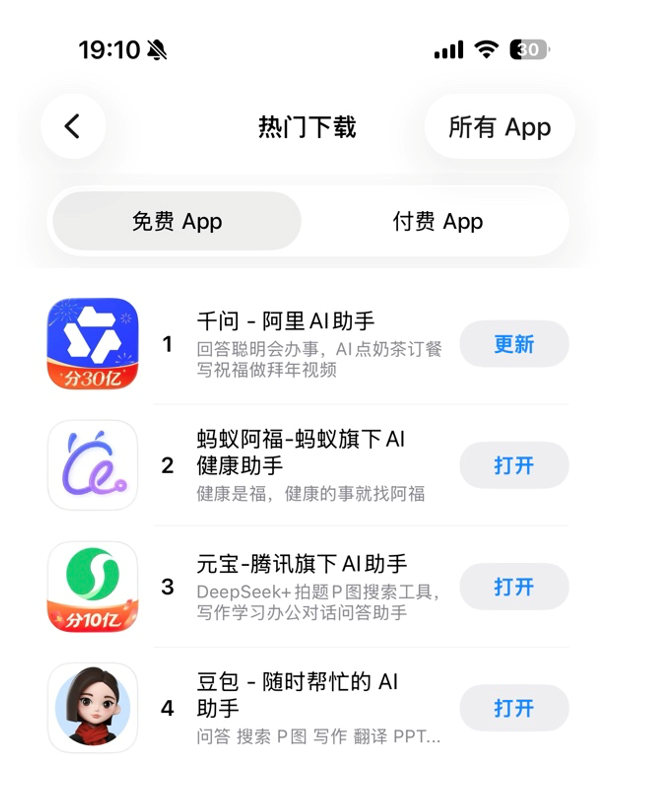
China's Apple App Store witnessed a dramatic surge in downloads for Qwen and Ant Afu this week, propelling both apps to the top spots. The sudden popularity comes as Qwen runs a tea-ordering promotion while Ant Afu partners with CCTV's Healthy Life program. Since its December update, Ant Afu has expanded its healthcare network to connect users with 300,000 doctors nationwide.

February 11, 2026
mobile appsdigital healthChina tech
News

China Unveils Groundbreaking AI Models for Pear and Soybean Farming

China's agricultural sector takes a leap forward with the launch of two specialized AI models - 'Lixiang' for pear cultivation and 'Fengshu' for soybean farming. Developed by Anhui Agricultural University, these tools promise to revolutionize traditional farming methods by applying cutting-edge technology to age-old challenges. From speeding up breeding cycles to predicting crop traits with 90% accuracy, these innovations could reshape how we grow staple crops.

February 11, 2026
agricultural technologyAI innovationfood security
AI Showdown: Claude's Big Leap, Qwen's Red Envelope Rush & Tencent's Manga Move
News

AI Showdown: Claude's Big Leap, Qwen's Red Envelope Rush & Tencent's Manga Move

Today's AI landscape sees major players making bold moves. Anthropic pushes boundaries with Claude Opus 4.6's massive context window, while Alibaba Qwen battles server crashes amid its wildly popular Spring Festival promotion. Meanwhile, Tencent enters the animated manga arena with Huolong Webtoon, and regulators crack down on AI copycats. From digital employees to automated anime production, these developments showcase AI's rapid evolution across industries.

February 6, 2026
AI innovationtech regulationdigital transformation
News

UN Forms AI Safety Panel with Chinese Experts on Board

The United Nations has taken a significant step toward global AI governance by establishing an International Scientific Expert Group on AI Safety. Two prominent Chinese scientists specializing in AI ethics and technical safety have been selected for this inaugural panel. The group will assess emerging AI risks and provide policy recommendations, marking China's growing influence in shaping international AI standards.

February 6, 2026
AI governanceUnited NationsChina tech
News

China Unveils Massive 30,000-Card AI Supercluster

China has taken a giant leap in AI computing power with the launch of its first 30,000-card supercluster at Zhengzhou's National Supercomputing Internet hub. This massive computing pool, developed by Sunway in record time, supports trillion-parameter models and promises revolutionary breakthroughs across scientific fields. The system's open architecture makes it surprisingly accessible while offering unprecedented scalability.

February 6, 2026
AI infrastructurehigh-performance computingChina tech